

As a major player in both the Toronto and Montreal’s jazz scenes, Eric St-Laurent is no stranger to a variety of venues and styles. While Kensington Market Jazz Festival (KMJF) celebrates its tenth year of connecting talented musicians with music lovers across the city, there’s no better time to reflect on both St-Laurent’s and the festival’s beginnings. Though often occupied performing around the world and recording with a variety of artists, he always finds the time to return to the festival each year. If that doesn’t speak to KMJF’s importance in the jazz scene, then I’m not sure what does. For anyone who doesn’t know, the festival is a purely volunteer-run, three-day jazz extravaganza that combines free events with paid ones in a variety of different venues. As an audience member, you can enjoy music anywhere from the sidewalk to a clothing store, and far beyond if you’re willing to shell out a few bucks. As a part of a collaboration between Demo Magazine and KMJF, this interview covers everything from St-Laurent’s first involvement in the genre and the festival, to how they’ve both evolved throughout the many years he’s been a recognizable face around those familiar Kensington streets.
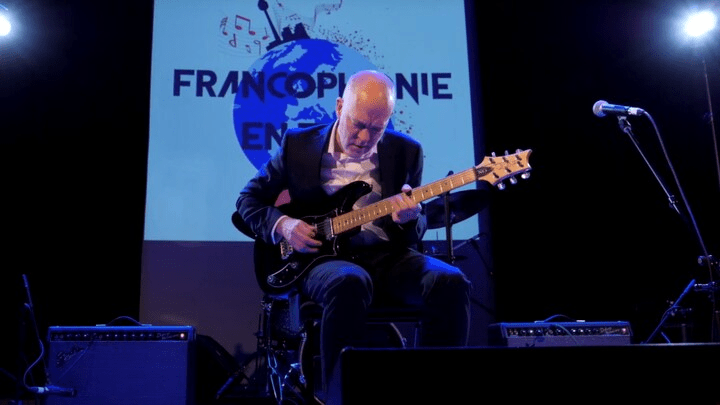
St-Laurent has been around jazz since he was young, a genre which he considers “quickly addictive.” He grew up listening to his father’s collection of over a hundred records, which included greats like Buddy Rich, Erroll Garner, and Oscar Peterson. He ended up imitating these same sounds when he first got his hands on a guitar. Even today, listening plays a key role in how he interacts with music. “The music is so beautiful, so profound,” he says. “There’s so much poetry in it, so much magic and mystery that if you hear it a few times and if you’re open-minded enough and you let it wash over you, you’re a fan. I listen to jazz for several hours every day, and it’s a huge part of my life.” There are a few albums he recommends to people looking to dip their toes into the deep waters of the genre, some of which are the very same that he was raised on. Naturally, Kind Of Blue by Miles Davis is a classic pick, which he describes as “very moody and sexy.” However, one closer to his heart is Erroll Garner’s Concert By The Sea, which works at several different levels and forces the listener to adopt a St-Laurent’s devotion to the music itself. “It’s very energetic. You can listen to it superficially and have a great time and say, ‘This is wonderful and pleasant.’ Then you can also put on the headphones and close your eyes and pay attention to the music and get into a completely different, deeper level of understanding. I’ve been listening to it pretty much all my life and I still hear new things, and if I don’t listen to it for six months or so, and I put it on, it feels like new.” Despite jazz’s inherent creativity and ability to evoke such powerful emotions, St-Laurent admits that he’s never sure whether people’s enjoyment for the genre is going up or down. Often seen as pretentious, or even just background noise during dinner conversation, it’s not surprising that the style often gets a bad rap. However, St-Laurent points out that you get back just as much as you put in with jazz. “It’s a sophisticated genre that demands a little effort, [but] I don’t want to make it sound like homework. Most people don’t have the energy and that’s okay, they live insanely busy lives. The thing that’s important is it’s always been there. And there’s always a few hundred thousand people who get it. Every major city has a jazz festival, every major city has a jazz radio station, there are magazines, there are record labels. It’s alive, it’s relevant, it exists, and it’s beautiful.” Perhaps this minority is why KMJF continues to thrive despite the hectic pace of life in Toronto.
St-Laurent first got involved in KMJF because of his closeness with the organizers, in particular the legendary Molly Johnson. He’s worn many hats over the years, as an accompanist, bandleader, and even playing in the festival with his own band. “It’s a beautiful festival. It’s small, it’s lean, mean, and efficient, and it delivers just wonderful music in a format that I really love. One hour shows in small venues that are all [within] walking distance,” he explains. Even through the pandemic, the festival didn’t lose steam or its dedicated audience. Despite having spent those turbulent years hiding out in the forest (yes, literally), St-Laurent recalls what it was like to return to KMFJ. “I had met audience members who were crying because they missed it so much. And that was incredibly moving. It showed the power of community, of all being together in a room and participating in art,” he says. As the festival speeds towards its landmark ten year anniversary, there’s some thought being given to how it will continue to grow. As a key figure, St-Laurent has a personal perspective on the future of KMFJ. As he’s witnessed the dedication that’s been poured into the festival, his wish is simple: “I hope that it can grow to a point that it attracts people who will eventually take it over. In ten, 15 years, I hope that it’s still there. I hope there’s a different, new generation of people who will have understood the importance and the impact that it has and why it’s a beautiful endeavor. The hope is that when we start something like that it grows beyond ourselves, and that it acquires a life of its own.” If the waterworks from the audience is any indication, I’m sure finding a new crop of jazz lovers to carry the festival on will not be a challenge. When not playing at KMJF, St-Laurent is still busy working on his own projects. These days, he takes inspiration from a variety of communities around Toronto, but especially those with people from South American diasporas—members of his band are from Lima and Cuba. St-Laurent says, “I learn from them all the time. That’s one aspect of Toronto, you know, the music that is presented at Lula Lounge on a daily basis has been a huge part of my development over the years. I go there and I learn. It’s like school, right? I just pay for my ticket and absorb what these people are doing.” His current project is called Science Fiction Cumbia, and blends themes from the much-loved genre with Latin rhythms, as well as drawing on the Great American Songbook.
Eric St-Laurent’s dedication and love for both Kensington Market Jazz Festival and jazz as a whole are part of what make him a key part of the lineup every year. He’s had the immense privilege of seeing audiences flock to see live music for ten years, and will be performing this year to continue the tradition. Be sure to stop in for his set on September 21st to catch this legend in action, and maybe even strike up a conversation about his record recommendations.







 Demo Magazine
Leave a comment