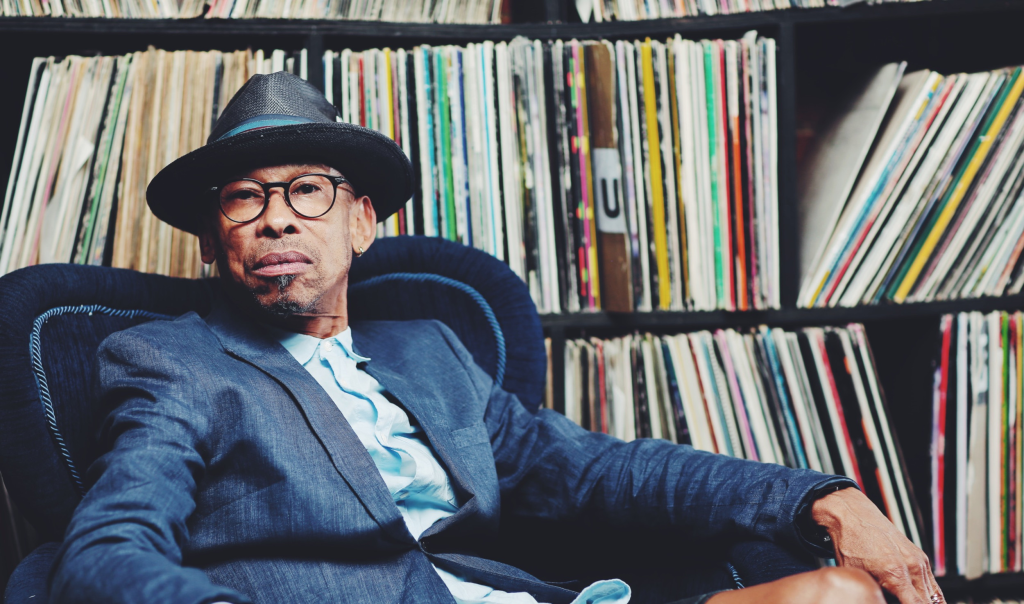
“We need the Kensington Market Jazz Fest to keep us alive,” Billy Newton-Davis told me in our hour-long interview regarding his upcoming participation in the KMJF. Newton-Davis is 74 years old, a multiple-time JUNO award winner, and perfectly embodies the archetypal mid-20th century musical showman. Born in 1951 in Ohio, Newton-Davis has been around and involved in music for practically his entire life. He began singing at age five in his local church gospel choir, which he identified as “the foundation of my existence [as an artist].” He recalls early encouragement from his parents and grandmother who he describes as “very musical people” that “always had great music playing.” They exposed him to different musical acts by putting on The Ed Sullivan and Jackie Gleason shows (comedic/musical shows from the 50s), and pushed him to incorporate a great variety of styles into his own performance. It is perhaps in these beginnings from which Newton-Davis’ incredible musical and performative malleability was born. His music career spans a wide variety of genres, ranging from R&B to EDM. He’s won JUNOS for accomplishments in both fields: two for R&B in the 80s and one for a collaborative track with DJ “Deadmau5” in 2008.
Newton-Davis also credits his artistic variability to his unique personality. Unlike some of his peers, he had no problem in going “from the church to the nightclub” in search of new ways to express himself artistically. It is exactly that self-expression that Newton-Davis sees as the cornerstone of his art. His stylistic diversity is a manifestation of the whirlwind of a man that, even at a semi-advanced age, manages to exude charisma and character with every word. To understand why Newton-Davis thinks that we need KMJF “to keep us alive,” one needs to understand the importance of history and musical lineage to Newton-Davis’ self-conception as a performer. He understands himself as hailing from, and being a representative of, a storied musical legacy—something he kept referring to as a “lost art” which he and the KMJF are preserving.
Newton-Davis broke into the Cleveland musical scene as a member of a local band called The Illusions, and after graduating from Ohio University, moved to New York City to pursue his Broadway dreams. As a microcosm of his New York experience, I’ll present what Newton-Davis calls his “Miles Davis story.” His eyes glowing, Newton-Davis recalled: “One night, I was going out, I walked out of my one-bedroom, next to [Miles Davis’] three story townhouse… He and a friend of mine were out looking for a cab, so they invited me to get in!” At this moment Newton-Davis paused his story, eyes sparkling with joy, to remark, “This is such a good story, I love this story so much!” He resumed: “I tell them I’m going to Tribeca, [and] they say, ‘We’re going downtown, we’ll drop you [off].’ At this point, I lived in the 70s [of New York’s numbered streets] somewhere. Anyway, I get in the car, we start talking, and all of a sudden Miles Davis says to the cab driver, ‘Stop!’ Then he looks at me and he says, ‘Get out! Get out of the cab!’ ” For all intents and purposes, the story is quite sad, and perhaps a different person would not volunteer it as readily as Newton-Davis did for me, though the joy with which he recalled it and his later comments reveal that his brush with the legend was a mark of personal pride. “But that was a moment,” he said, reflecting on the story, “that was a moment I got to see, in my opinion, the real Miles Davis!” Eventually Newton-Davis left New York and Broadway behind, moving to Toronto to pursue a career as a singer in earnest, but the dynamism and vibrancy of that city and time live on, manifesting in his music and character.
Understanding himself as working in the storied tradition of jazz is clearly important for Newton-Davis. He remarked that, “Later in life I got to work with the greats who followed the greats, who followed Aretha [Franklin], who followed Ella [Fitzgerald], who followed Cannonball and Nat [Adderley].” Newton-Davis is the living legacy of the golden age of jazz—“the very venues that you talk about, the very people, the very genres of music, I lived that whole thing. I do what I do to preserve that lost art.” I think it is also his commitment to personal—and as an extension artistic—authenticity that serves as a driver for Newton-Davis’ reflections on the importance of community driven festivals like KMJF. He works towards preserving some venues and spaces for novel, unconstrained artistic expression, especially when they help to keep jazz alive. “I don’t want the city to become so sophisticated so that it only becomes beautiful restaurants and venues,” Newton-Davis told me, “[that] we only have a couple venues where supposedly you want to be. I think Molly [Johnson, founder of KMJF] has created a venue for jazz that you wouldn’t ordinarily get.” I can’t help but agree with Newton-Davis. The relaxed, friendly atmosphere at KMJF is a welcome change from many of Toronto’s stuffy and faux-upscale jazz venues.
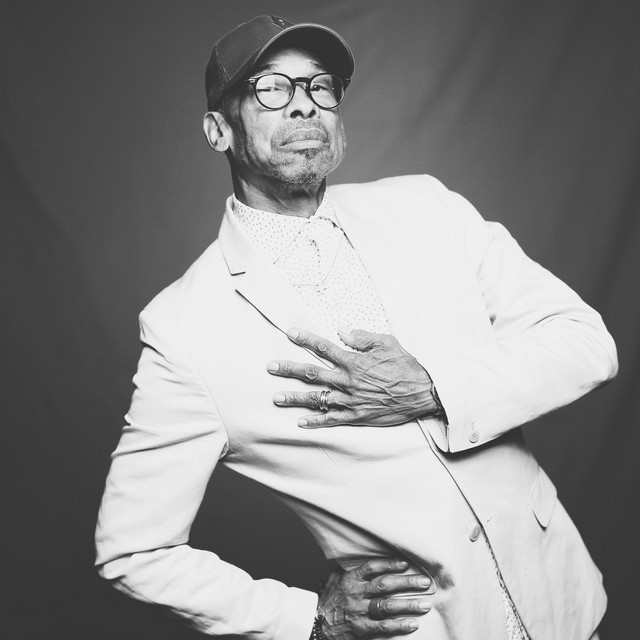
Maybe the most valuable thing about KMJF is its accessibility, for audiences and performers alike. Reflecting on the festival means for local performers, Newton-Davis said, “I think the festival has allowed young artists to come up and show their wares. The KMJF has allowed you to come in, whether you’re known or you’re unknown, and it’s a vehicle that’s been set up as an opportunity for us.” As much as the festival is an opportunity for the performers, it seems that Newton-Davis equally values it as an opportunity for audiences to experience a variety of artists in a more informal setting. He explains that “it gives people an opportunity not to always go to Koerner Hall, or Massey Hall. It’s an expensive night! The festival allows people to come in and just do it. It’s made it easy to bring the music to the people, and I think that’s very important. When we take that away from people, we’re taking art away. Music makes life exciting for us.” For someone like Newton-Davis, who grew up being taken by his father to see musical legends of the past, his commitment to the KMJF as an affordable, unique, community driven hub for musicians and audiences to come together and experience one another is perfectly natural.
Early in our interview, Newton-Davis told me, “Memories are the best thing we have of music.” I wholeheartedly encourage everyone who can to attend KMJF, and make some memories. For Newton-Davis, KMJF is a place for artists to share their art in a way that they wouldn’t do otherwise. Unpretentious and community-oriented, the festival is exactly the kind of place where the artistic and personal authenticity he embodies and chases after thrives. To see Newton-Davis perform is to see history reinvent itself in front of you, and to come to KMJF is to become a part of history itself. Come see Billy Newton-Davis on September 19th at 9 p.m. on the stage of Supermarket in Kensington. I know I’ll be there.



 Demo Magazine
Leave a comment