To be very honest, I don’t like the colour blue. Nothing about its shades seemed to catch my eye the way other colours did. Blue is one of the most common colours found in nature – the dark indigo night sky, snow-covered cerulean mountains, or the deep prussian blue waters never truly spoke to me the way pink cotton candy sunsets or lush sage forests did. On a deeper emotional level, it never felt like me. Blue symbolizes traits like peace and serenity, while also symbolizing negative themes of sadness and isolation. The colour blue has so much depth to it, but I was struggling to understand just the tip of the iceberg. I just couldn’t connect to the colour like others do. I picture myself as a vibrant red, something completely different. I view blue as this totally opposite universe that just isn’t for me. I didn’t think that I could write about blue at a personal level. What do I know about blue?
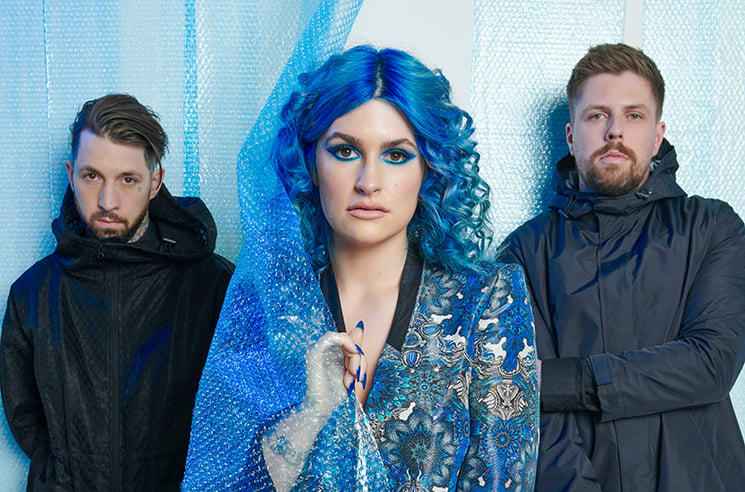
However, I persisted and wanted to write about one particular album. When I first listened to this album around the time of its release, I didn’t know what to think of it. It was a completely different world, parodying my dilemma with the colour blue. How can I like something that I know very little about? Now, after finally reflecting upon this album a good four years later, this album means everything to me. And this very album is Eternal Blue by Spiritbox.
Many modern metal bands don’t have a specific genre they pertain to, so the best way I can describe Spiritbox in terms of genre is metalcore. A subgenre branching from metal and hardcore punk, metalcore was created in the 1990s, shaped by bands like Converge, Integrity, and Earth Crisis. Metalcore didn’t really take off at this point, and it was only until the early 2000s, when new artists like Killswitch Engage, Atreyu, and Bullet for My Valentine emerged with the signature sound and style we often associate with metalcore. The genre typically consists of a structured chorus with a clean vocal melody, heavy downtuned guitar riffs, breakdowns, and aggressive metal screams. Spiritbox’s Eternal Blue also takes inspiration from other genres like progressive metal, showcased by the album’s amazing basslines.
Released in 2021, Eternal Blue was Spiritbox’s breakthrough album. Spiritbox released three songs prior to its full release, and these tracks defined the entire album’s artistic vision. Their first release off Eternal Blue was “Holy Roller,” which was incredibly popular and well-received by critics and casual listeners alike. This release marked a pivotal moment in Spiritbox’s career as they shifted towards a more aggressive sound. Spiritbox also released “Circle With Me” and “Constance” prior to the album, showcasing an exploration of different lyrical themes and subgenres.
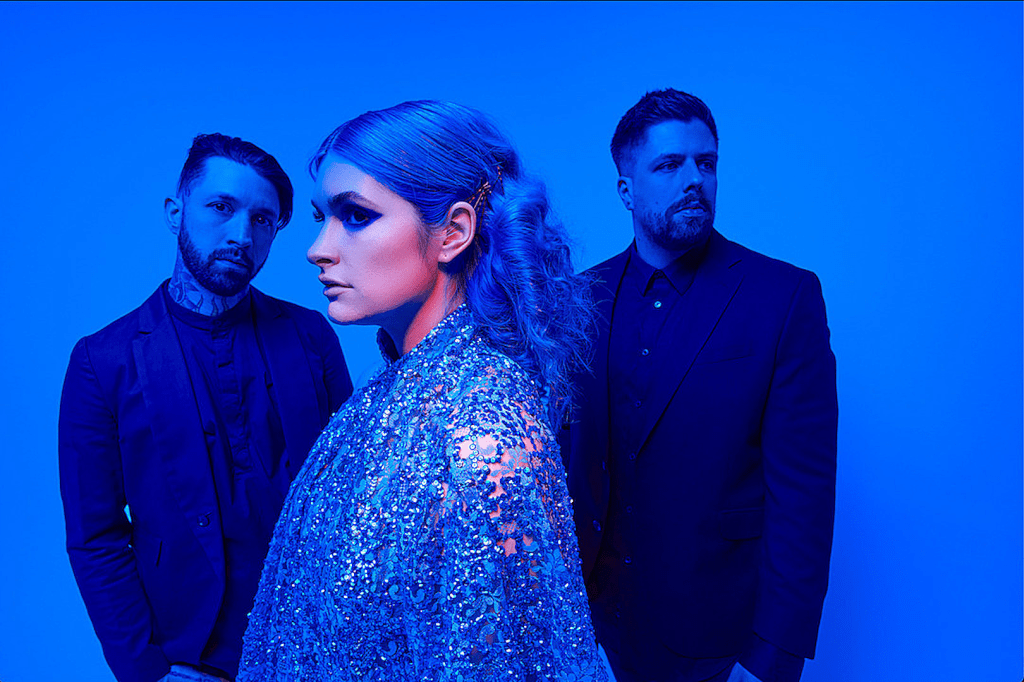
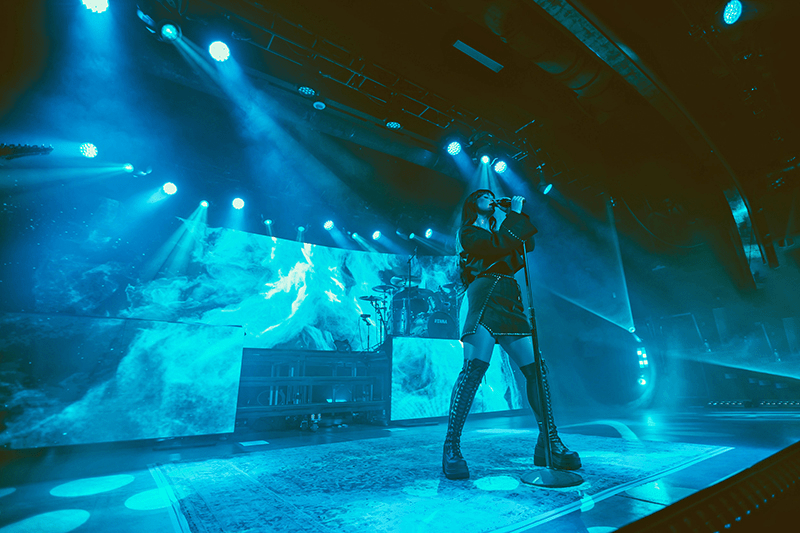
Much of their success can be credited to the extremely talented Courtney LaPlante, the vocalist and frontwoman of Spiritbox. I’m personally drawn towards the stark contrast between her melodic clean vocals and her distorted screams. LaPlante’s heavy death growls are very familiar to longtime metalcore fans, as she was the vocalist for the Louisiana metalcore band iwrestledabearonce from 2012 to 2015. However, where Spiritbox differentiates from their previous band is when LaPlante seamlessly switches to her clean vocals – a haunting siren-like voice delivers the chorus and melodies, creating the perfect blend of two worlds.
Blue is the focal point of this album. The name given to the album, Eternal Blue, refers to the moods and underlying themes of the album that feel constant and everlasting. The more intense, heavier songs include themes of struggle and hardships, something typically symbolized with a dark blue. There is a sense of calmness and tranquility in the album’s slower and melodic songs symbolized by a lighter blue. The entire album is a true description of the colour blue, pulling from the various ranges of emotions blue can represent.
The album begins with “Sun Killer,” a cinematic masterpiece of an opening. The song describes itself as a “sun killer lullaby,” which uses themes of depression and struggle. My interpretation of this song is that it’s about someone who is facing a difficult time in their life– they live in the dark, thus being a “sun killer.” They would then attempt to cope by repeatedly soothing themselves using a haunting lullaby. The song nails these themes perfectly by slowly creating this illusion of calm, repeating the lyrics: “Sun killer, sing me to sleep.” The listener finds comfort in the lullaby, until it suddenly drops into a heavy breakdown. It is the perfect starting point of the album, as it builds anticipation and sets a scene for the rest to come.
I personally feel that “Silk In The Strings” has the best guitar composition in Eternal Blue. It’s very technical, which is what separates Spiritbox from early 2000s metalcore, yet still holds true to the genre via its heaviness and death growls. “Holy Roller” is another one of my favourites where LaPlante uses only screaming techniques. LaPlante has a very polished and professional voice, as she screams with precision and control, while also being able to switch ranges consistently. This is a very masterful approach to metalcore, considering that most vocalists develop their screaming techniques in a low-budget garage band setting. It’s surprising that LaPlante had no previous background in singing at a professional level, until her debut in iwrestledabearonce.
“Holy Roller” is over-the-top in all the best ways possible, straying away from their usual melodic pieces. It plays homage to her roots in metalcore by having themes of being critical of Christianity, something many metalcore bands conceptualize and experiment with. Struggling with faith and critiquing aspects of Christianity has always been a recurring theme in metalcore songs, and “Holy Roller” explores this theme using selfishness within the subject of Christianity, delivering lyrics like “And when I die, you won’t pray for me.” LaPlante describes religious guilt within the community, where they shame people within as well as outside their religion for not devotedly believing in their God.
For Spiritbox’s more melodic pop rock songs on this album; “The Summit,” “Constance,” and “We Live In A Strange World,” I can only describe them as an atmospheric haze. These songs are slower, deeper, and intimate, allowing LaPlante’s hauntingly beautiful voice to take the main stage. “The Summit” is no doubt Eternal Blue’s catchiest song, and “We Live in A Strange World” has extremely thought-provoking lyrics about our current obedience in our societal systems. But nothing holds up to “Constance,” my personal favourite of this album. “Constance” is a remnant of the cold mountain breeze, something very on brand for a British Columbian band. This was the first song on my mind when I was visiting Whistler, B.C. this past August. I was surrounded by the colour blue atop the mountains, thinking about how it was such a fitting song to describe the scenery. Reflecting on this moment, it made perfect sense how Spiritbox could perfectly capture every feeling of a blue atmosphere. British Columbia is surrounded by all sorts of blues, after all.
For someone who didn’t understand blue, Spiritbox redefined how intimate and spiritual the colour blue could be, just like how they redefined the metalcore scene. I didn’t really think of all these deeper themes the first time I listened to Eternal Blue. And now, four years later, after a couple of re-listens with new experiences and thoughts in mind, I finally understand it. Even if I don’t see myself as blue, we all are human and experience hardships, struggles, and sadness. As much as I try to distance myself with the colour or the sadness that comes with it, it always comes back around. Instead of suppressing those feelings, I needed to be comfortable with it. Spiritbox’s Eternal Blue perfectly encapsulates being okay with “feeling blue,” especially because it’s eternally part of our lives after all.
 Demo Magazine
Leave a comment