
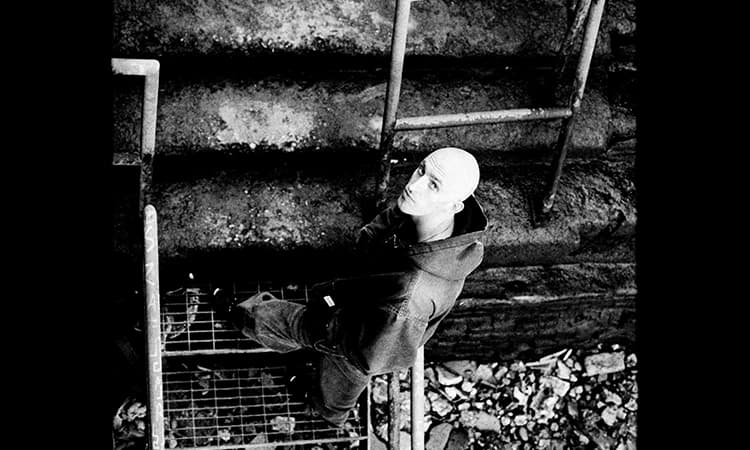
On an unbearably bitter November evening, Torontonians braved the cold outside The Garrison in hopes of a night of warmth, artistic intimacy, and profound depth provided by Mark William Lewis. The London-born genre pioneer brings a unique fusion of folk and alternative textures to his music. Supporting his sophomore self-titled album released earlier this fall, Lewis would deliver a performance that was both restrained and revelatory. His setup of acoustic guitars, profound percussion, and clear vocals rendered introspection into something unexpectedly powerful.
The night opened with Brooklyn’s up-and-coming Samba Jean-Baptiste, whose pared-down set featuring his most recent EP Access Delight immediately established a reflective, bittersweet tone. As a solo act, he flooded the stage with themes of nostalgia and soft tension. The audience responded with an almost devotional stillness to his paradoxical lyricism, like “Walk in the sacred light/Nothing to say before it.” from “Unfamiliar Heaven,” which leaned into the grain of his voice and the gentle, suspended atmosphere. His lyricism, stripped of excessive production, felt consoling and acted as an invitation to reflect deeply on personal moments in time, capturing emotion from a thousand different angles.
As the main act, Lewis was accompanied by his bandmates Jamie Neville on guitar and harmonica, Harry Plomer on bass, and Billy Howard Price on drums. In an instant, the landscape of The Garrison was filled with a buzzing hum of anticipation from its attendees. From the opening bars of “Socialising,” the night unfolded as an exercise in both layering sounds and exercising musical restraint. The push of looping riffs and pull of subtle harmonic interplay was delivered through whispered confidences – “You wait a little while for the apology/You had a little cry in the backseat/Now you know why you shouldn’t trust me.” Throughout the set, Lewis’s music oscillated between a dream-pop hybrid of introspection and folk-infused melancholy, his calm baritone crystal clear to the ear.
Later, “Cold Paris Vogue” expanded with harmonica and resonant bass, grounded by his rich and illustrative lyricism: “River rising/River rising, up, up/Sun is shining/Sun is shining down/Read it through/Your ice-cold magazine.” Meanwhile, “Seventeen” and “Silver Moon” conjured mental images of cinematic expanses mirroring the cityscapes that haunt his writing. The set felt anchored by Lewis’s dusky baritone and the way his songs evoked a sublime yet urban landscape of modern London at night – its tall buildings mixed with green grounds, with its four seasons whirled into one eye.
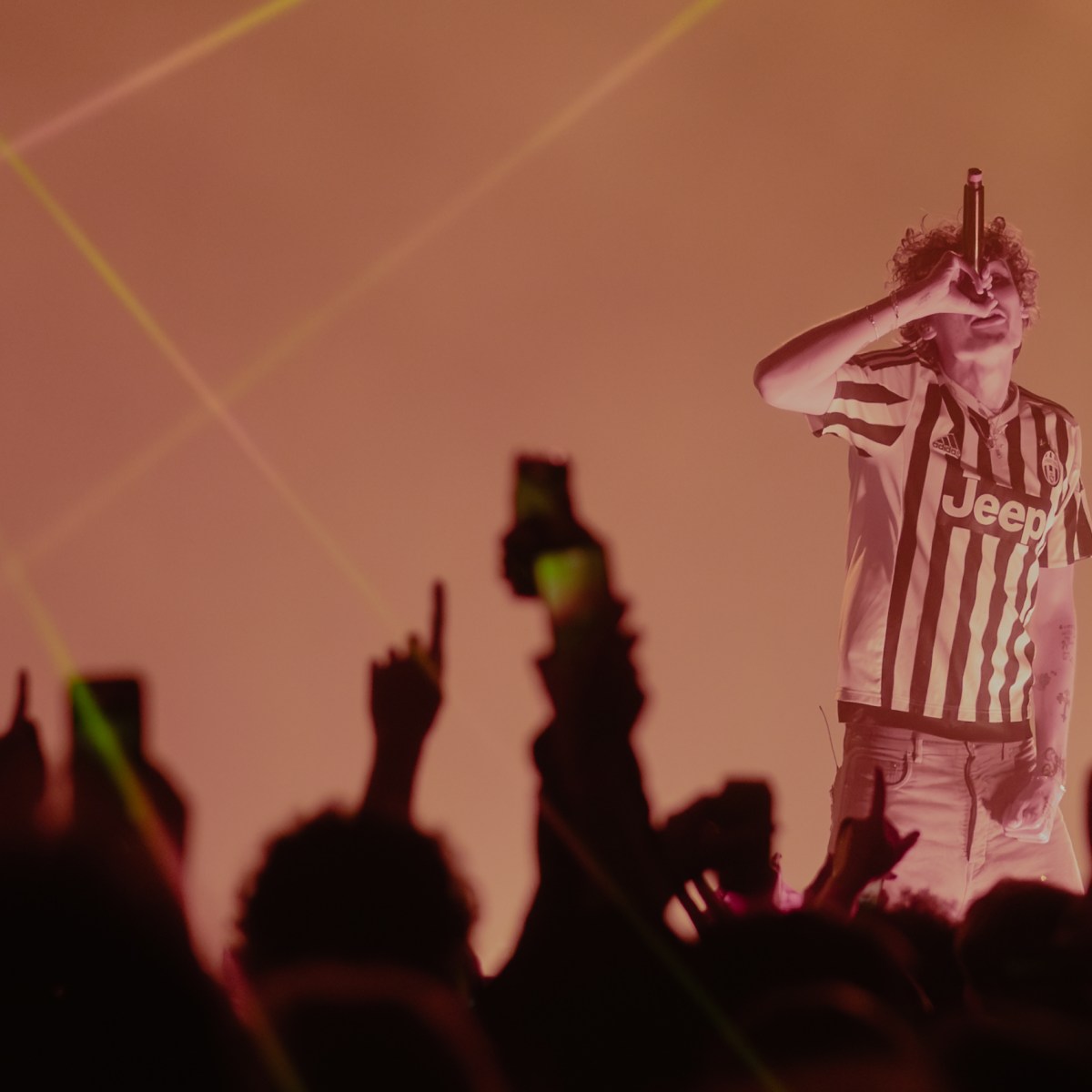
There were soft, simple hues of purples and reds from the light projection that paired nicely with the venue’s spinning disco ball. This atmospheric effect was amplified through the lack of distraction from phones or external devices, forcing his listeners to consider the tonal buildup towards a sublime landscape of bass. Interestingly enough, this show’s etiquette was superb, as the common unspoken courtesy between attendees was to power off their phones and fade into the background. I noticed that the attendees were attuned to Lewis’s inflections not for any other gain but to nourish one’s own soul.
As the set immersed me in the headspace his self titled albums creation, he cemented this understanding with his encore of “High Energy,” “Blue Honda,” and “Cut Glass,” serving as a gentle final exhale of a night steeped in lyrical introspection. As the sixth stop on his North American headline tour, I was lucky enough to experience what makes Lewis so remarkable live: his capacity to translate a deeply personal world to a broad audience. Together, Samba Jean-Baptiste and Mark William Lewis invited a gentle unburdening, drawing the crowd into a shared, lingering quiet beyond the confines of the Garrison’s walls.
 Demo Magazine
Leave a comment