Photos by Olivia Dans – Portfolio – Instagram
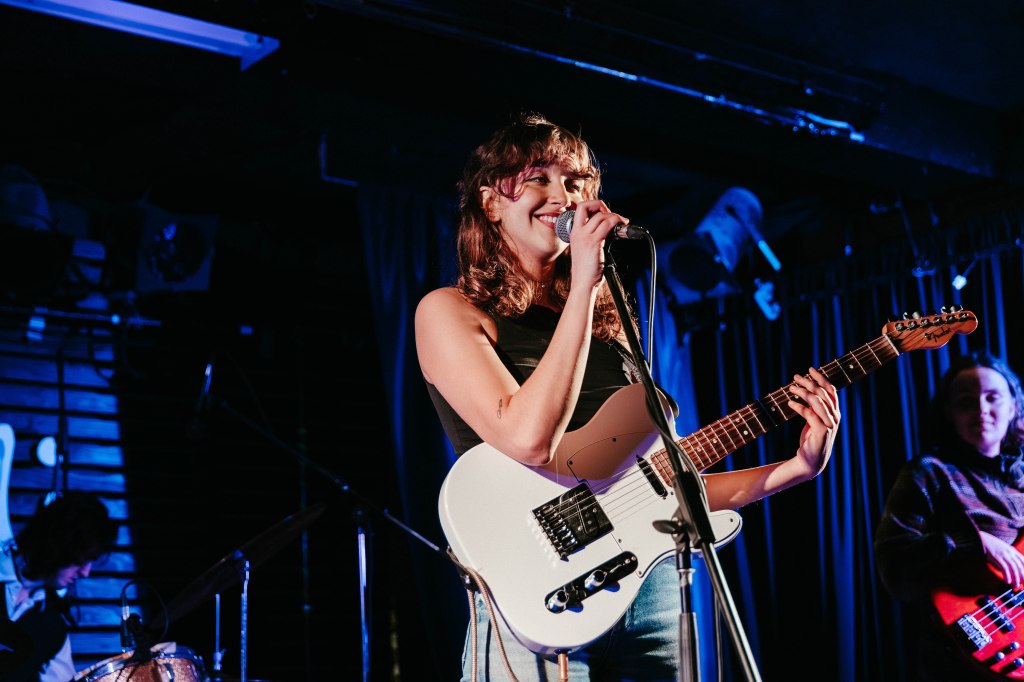
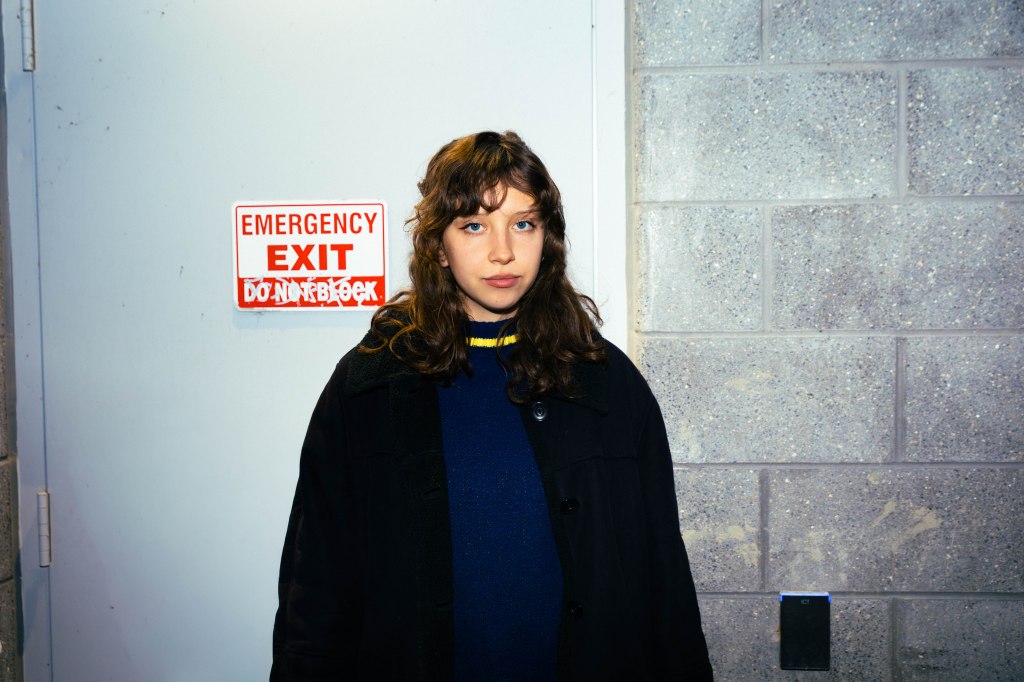
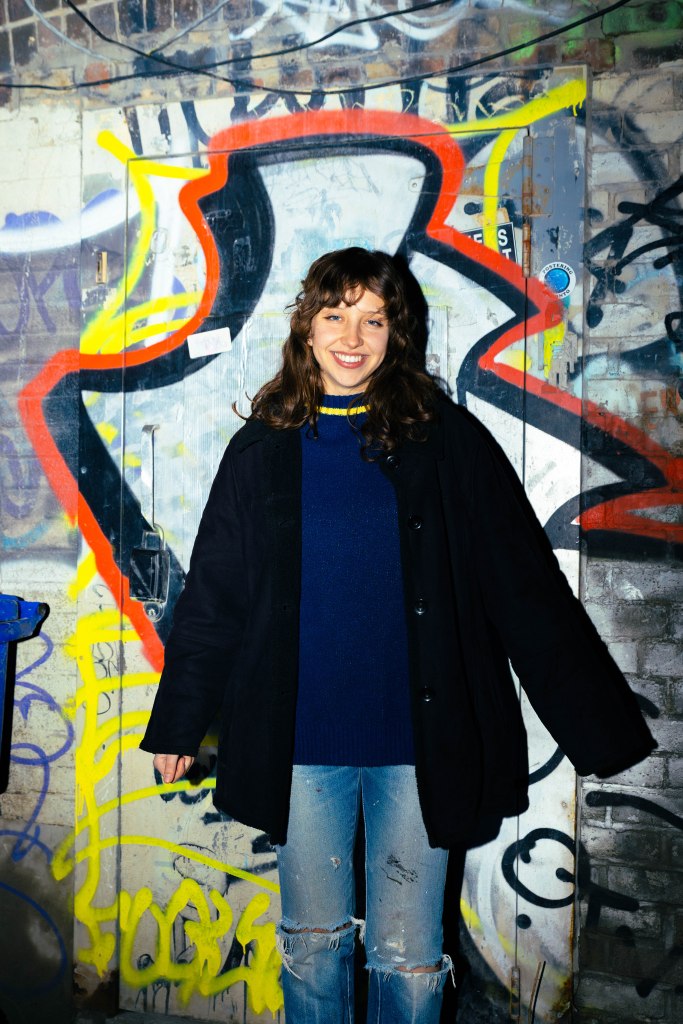
Bright and brilliant, Toronto-based songwriter Lia Pappas-Kemps writes her music with an inviting sense of urgency, catching fleeting thoughts and emotions in real time. Building up to the spring release of her first album, Winged, she finds herself caught between reflection and momentum. Pappas-Kemps holds onto the honesty that defined her early work, Gleam, while pushing toward a sound that feels bigger and more confident. I spoke with her to discuss growth, immediacy, and the emotional and physical spaces that have shaped her distinct songwriting. The following conversation has been edited for clarity.
You’ve credited artists like Alanis Morrisette, Soccer Mommy, Alvvays, and The Strokes as influences on Gleam. What is it specifically about these artists, whether it be their emotional honesty, sound, or storytelling, that pulled you into that psych-rock, alt-rock space?
Lia Pappas-Kemps: I feel like I pull such different things from each [group]. Alanis [Morrisette] was a huge artist for me at such a specific time in my life, where I was just discovering songwriting, and I was so obsessed with her honesty. I hadn’t heard honesty like that in that way. With Soccer Mommy, colour theory specifically, I loved how sonically consistent that album was, same with The Strokes. I love that they make records.
Following up with your major influences, did you have THE album that made you fall in love with songwriting?
LPK: Blue by Joni [Mitchell], Blue or Court and Spark, either of those. I feel like I became obsessed with her in middle school, at the time I started writing songs. I feel like that’s such a classic trajectory to say that.
Now I love what you’ve said about Gleam and how it’s a “fragmented love letter to your teenage years.” Now, looking back, what moments or emotions from that period of your life felt most urgent to preserve in those songs?
LPK: It’s interesting thinking about Gleam in comparison to my new album Winged and what feelings have stayed consistent in my songwriting. I feel like there is a different sort of urgency, as you said, with Gleam. I think I had this teenage sense of desperation that mellows out when you get older. “Switchblade” was the song I wrote when I was the youngest on the EP, and it feels so juvenile to me now, thinking about the notion of feeling like I could and should change for someone, to put it plainly. I feel like I’ve been slowly rejecting that idea as I get older. While I use the lyrics in “Switchblade” sort of metaphorically, I think I did sort of feel that way, like I was willing to shift for other people. I think the desperation was urgent, but I still do write about that, as it threads through my songwriting.
Your newest single, “Revolving Doors,” feels like a step forward sonically and emotionally. What does this song represent for you in terms of growth or transition compared to Gleam?
LPK: Well, I’m in the song essentially saying: I used to believe that I was the sum of all these people that reflected upon me, who wanted me. [It’s about] trying to let that go and allow[ing] yourself to be enough and choose someone that is maybe better for you. I guess [to] indulge in more pure feelings.
Who have you been collaborating with on your upcoming album, Winged, and what kind of atmosphere or space feels most important to you while recording?
LPK: Well, I made the record with my cousin, and we started ideating about it when we were living together in Montreal. We had this weird apartment that was set up strangely and was undecorated. It felt like a liminal space in a way. He hooked up his computer to a flatscreen TV and worked on the TV all over a strange setup. I think it was because I didn’t think we would keep any of the recordings. That was an amazing environment to create in, and we ended up keeping a good amount of the recordings that we did there. I think the songs, the new ones, a lot of it was recorded there, and I think you can kind of feel that in the music. It also feels so special to me to have that apartment be immortalized. But otherwise, I worked with the band I played with the other night at Exclaim!: Dylan, Julien, and Melissa, and we did a lot live, and then I mostly overdubbed the vocals. A lot of the recordings are us all playing all together, which I loved.
When you’re in a sound room by yourself, and you’re doing one track, it can sometimes feel very sonically isolating; that must have been quite special to do it as a group.
LPK: Yeah! I think you can hear it. I’m forgetting which ones we did to [a] click now, but I think most of them we did live [without one]. We kind of moved together, which was really fun. Recording can be a struggle and nerve-wracking, but when we’re playing the music together, it just feels like what we really want to do.
Lyrically, when you were writing, was it a collection of lyrics in a diary, or was it more so, looking at a specific perspective?
LPK: Good question, it’s interesting to look at the things I write objectively. When I listen back to this album now, I realize that ‘Dang, that was so potently “my life.”’ Maybe I said things that I didn’t come to terms with until later, which maybe I need to examine. Maybe I don’t admit these things to myself, I don’t know. I tend to just sit down with a guitar and just write; I don’t have a lot of forethought. I think when I hear people say A) “I had this experience,” and then B) “I wrote about this experience.” I think that’s so awesome, but I just can’t do that. I feel like I find it stifling to write about something intentionally.
Looking ahead, when we first listen to your new album Winged, what is the first thing you hope your listener feels or understands from you?
LPK: I hope people feel seen in their uncomfortable feelings around self-doubt. I feel like listening back now, now that I can look back at it objectively, and the feelings of unworthiness, whether that be within a relationship or friendship or feeling too naive or feeling too juvenile.
I touched on the concept of not feeling like a good partner [on the album], so I hope people feel seen in that. Also, on the more fun and upbeat songs, to dance. My motive for the next album is ultimately to have songs that people wanna dance to, or at least move to.
And a dream collaborator?
LPK: I’ve been listening to a lot of Alvvays, and going back to sonic cohesion in albums, I think they’re so good at that. I love their sound, plus they’re Toronto-based.
Five years from now, where do you hope to see your music? What’s a big leap you hope to take? What’s something you can clearly envision?
LPK: I think I just want to be touring and making records consistently. Being able to go away and make an album in full, have people want to hear it, and then play it live. That’s my life goal. So, hopefully, in the next five years, I’ll be 26, and I can be doing that consistently.
As Lia Pappas-Kemps completes the rollout of her new album Winged, what emerges most clearly is an artist learning to trust feeling as both a compass and a destination. Whether recording in liminal spaces, writing free of direct intention, or breaking barriers with a new sound, her work possesses true presence and gravity. As we spoke about her upcoming album, she revealed a clear confidence in her voice, not as a rewrite of Gleam per se, but a vast expansion of its emotional core. If Winged is any indication, Lia Pappas-Kemps sits in a chapter where movement, honesty, and connection remain at the centre of anything she makes. She has proven to have painted her own musical dreamscape, and we are lucky enough to witness it in real time. Winged releases Friday, March 13, and is available to pre-save here!
Check out more of Lia Pappas-Kemps via her Instagram or Spotify!
 Demo Magazine
Leave a comment