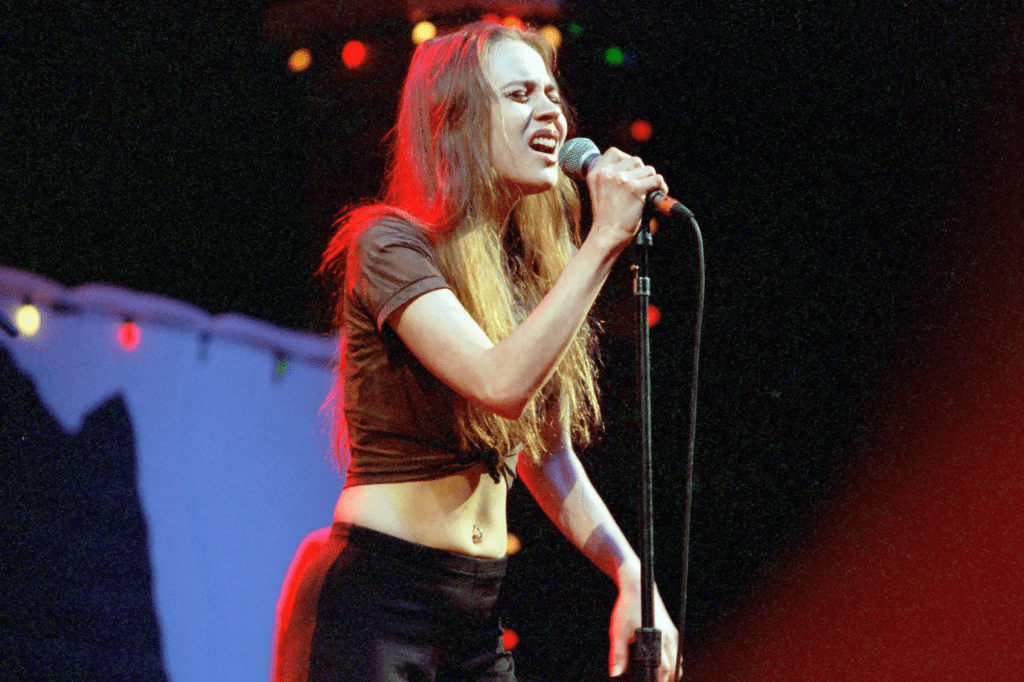
Secretly, I like to think that Fiona Apple and I are kind of alike.
So goes the parasocial relationship, I know. And I’m not even that obsessive of a fan. I know a good bit (but not all) of her public history, I’ve watched and read a few interviews, and I hold some of her quotes close to my heart. But when I put on her albums, I’m thinking about me, not which ex this might be about or how she wrote these lyrics at fourteen or how this line mirrors what she talked about in The New Yorker. Of course, that’s exactly what creates the perceived kinship—I relate to her writing so much that I delude myself into thinking that I must relate to the woman too.
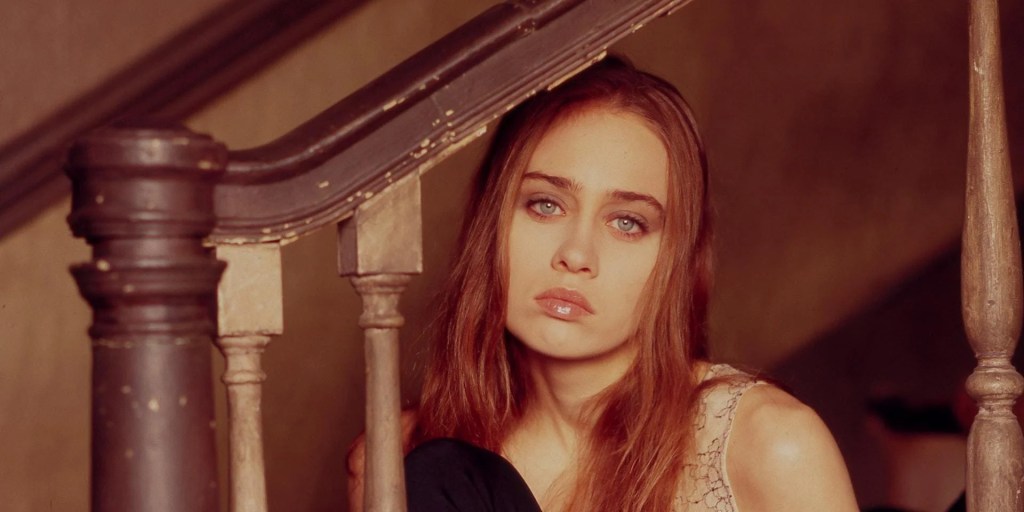
I’m not the only person my age who identifies with Apple; this generation of young women have latched onto her as strongly as her own did. Though “Criminal” off her debut album Tidal is still Apple’s highest-charting single and probably her most famous song, it’s her 1999 album When the Pawn…, considered by most to be her magnum opus, that I generally see resonate with fans the most. Its accessible production certainly contributes to this, but both Tidal and Extraordinary Machine (her third album) share that production quality. What I think stands out about Apple’s sophomore work is how totally raw it is. I love the intricate, metaphor-laden lyricism of Apple’s later works (The Idler Wheel… is my favorite album). But there’s something undeniable about the gut-punches of When the Pawn. “So call me crazy, hold me down, make me cry, get off now baby,” she snarls on “Limp,” one of her most famous tracks. “It won’t be long till you’ll be lying limp in your own hands.” “Limp” isn’t a personal favorite of mine, but this lyric reaches the core of my identification with its singer: Fiona Apple knows what it’s like for someone to look you in the eyes and think, ‘crazy.’ She knows what it’s like to navigate relationships when you’re insecure, emotionally volatile, and self-destructive. And in When the Pawn, she refuses to reduce that experience to a cesspool of misery. She makes the plight of the crazy woman something fun.
When the Pawn comes out swinging with opening track “On the Bound,” a five-minute ballad soaked in anguish and the harsh command of a wailing piano. The distorted electric guitar that drags out the outro is magnificent, but the meat of the song is in the throaty howl of the chorus. “You’re all I need,” she repeats again and again, before wryly adding, “And maybe some faith would do me good.” There’s a self-awareness present in that appendage: Apple acknowledging that maybe she’s coming off a bit insane. In the second verse, she launches into a frenetic admission of self-sabotage: “No thing I do don’t do no thing but bring me more to do/It’s true, I do imbue my blue unto myself, I make it bitter.” The mess of alliteration and internal rhyme has that same mocking edge—she laughs at the thorniness of her brain before she breaks into renewed begging for love.
“To Your Love,” which follows the opener, finds its glee in vindictiveness. “Here’s another speech you wish I’d swallow/Another cue for you for you to fold your ears/Another train of thought too hard to follow,” Apple drawls at the song’s outset, nakedly derisive. These lines betray a perverted pleasure that’s provoked by a hardening face—by watching someone steel themself for another spiel of hysteria, another round of tears and whining. Apple admits to self-hatred, singing, “The shame is manifest in my resistance to your love.” But her sultriness grants her words a wild kind of confidence, amplified by the piano’s provocative melody and the heartbeat-like pulse of the drums.
“Paper Bag,” Apple’s most famous song after “Criminal,” finds its fun in an endless well of tongue-in-cheek complaints. Apple minces no words in the chorus, repeated thrice after the bridge so that we can get it into our heads: “I know I’m a mess that he don’t wanna clean up.” But the song as a whole isn’t as vicious or charged as “To Your Love”; it takes profound disappointment and drapes it in jokes. In the opening verse, she looks for a so-called “dove of hope,” and ends her search let down completely: “I thought it was a bird, but it was just a paper bag.” In the bridge, she’s deeply in love with a man who can’t understand her neuroses, and she echoes the same sentiment in her framing: “He said it’s all in your head, and I said so’s everything but he didn’t get it/I thought he was a man but he was just a little boy.” Apple mocks her own naivety, rolling her eyes at the paper bag, at her lover, at herself.

The seventh track on When the Pawn, however, breaks from the grinning resentment baked into most of the album. “Fast As You Can” is a track about the pitfalls of when someone looks you in the eyes and thinks, ‘Crazy, but manageably so!’ The chorus isn’t a suggestion, isn’t some self-deprecating bait to gain sympathy. ‘For your own good,’ Fiona demands of the listener, ‘get rid of me’: “Fast as you can baby/Scratch me out, free yourself/Fast as you can.” She’s endeared by her lover’s confidence, crooning, “Oh darling, it’s so sweet/You think you know how crazy/How crazy I am.” In the face of assurances that she won’t be abandoned, she answers, “But I know/And I pray that you will.” This song is a favorite of mine—even cloaked in self-hatred and self-importance and condescension, it’s a love song. When dealing with oneself is unbearably painful, you want to spare others that suffering. It’s a fearful kind of love, don’t get me wrong, and that desire to have someone leave you can be just as much about protecting your self-image as it is about protecting them. But what Apple expresses before us all is the heartbreak of knowing how much someone matters to you, while knowing just as well that you’re bad for them.
I’ll never really know all that much about Fiona Apple, no matter how earnestly I’m attached to her music. My interpretation of When the Pawn doesn’t reveal some universal thesis of what it means to be a crazy woman. But Apple’s enduring popularity hasn’t emerged from a vacuum. In this album, and throughout all her songs, she grapples with the realities of neurosis. She doesn’t make that experience one-note; she allows herself to be devastated and gleeful and irritated and amused and furious and hopeful and so much else, never reducing one emotion for the sake of another. She’s unapologetic in her instability, and that defiance has allowed me to accept that it’s okay to be a little messed up in the head—and that it’s not an infinitely joyless experience to be. I smile when I’m singing “Paper Bag,” and so does Apple in the music video. For three minutes and forty seconds, we’re as alike as I like to imagine.


 Demo Magazine
Leave a comment