
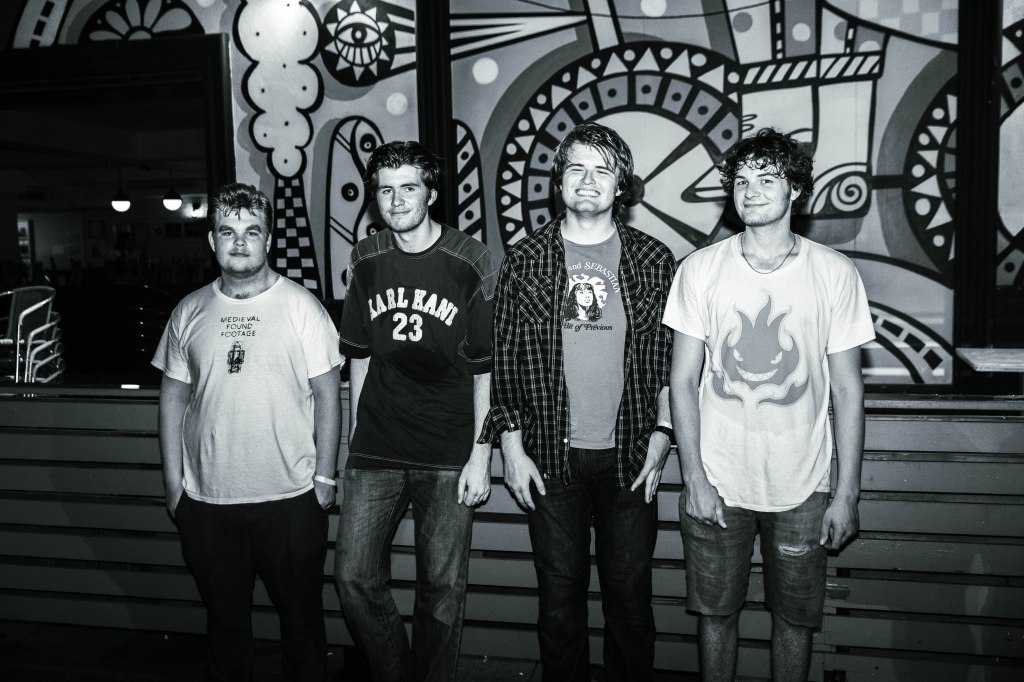
When I told my best friend that I secured an interview with Public Health in Hamilton, she told me, “I didn’t know you wanted to work in healthcare.”
So close! Different kind of interview. Very different kind of Public Health. If you want to read about a four-piece noise rock band (for lack of a label that truly encompasses it all) from Hamilton, Ontario, you are in the right place. And if not… Well, you’re already here, and I worked hard on this interview, so can you just keep reading out of courtesy, please? For me? Would you? Thanks. I appreciate it.
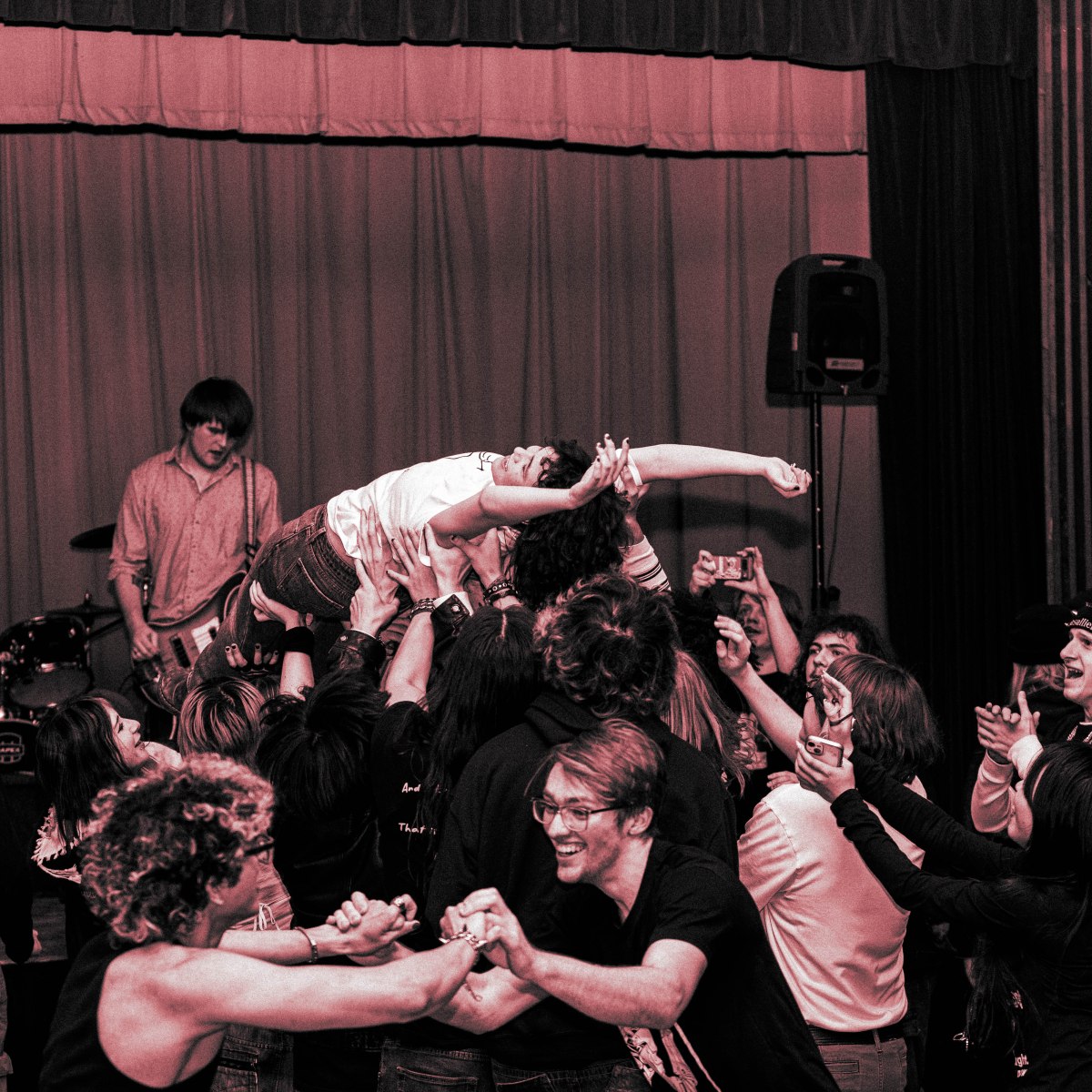
Though some time has passed since Public Health released their debut album, Minamata, in the summer of 2025, I still felt like there was much to be said about how the album came to be and what Minamata intended to take the listener through with its lineup of noisy yet delightful songs. Discussions of the production of Minamata, the past, present, and future of Public Health, the workings of the unconscious mind, the Beatles, and much more have been reproduced below in transcript form. Buckle up, it’s a long one.
For the full, uncut interview with all the goofs and gaffes, as well as additional footage of Public Health playing live at the Doors Pub in Hamilton, check out Demo’s first video-format interview with the link below.
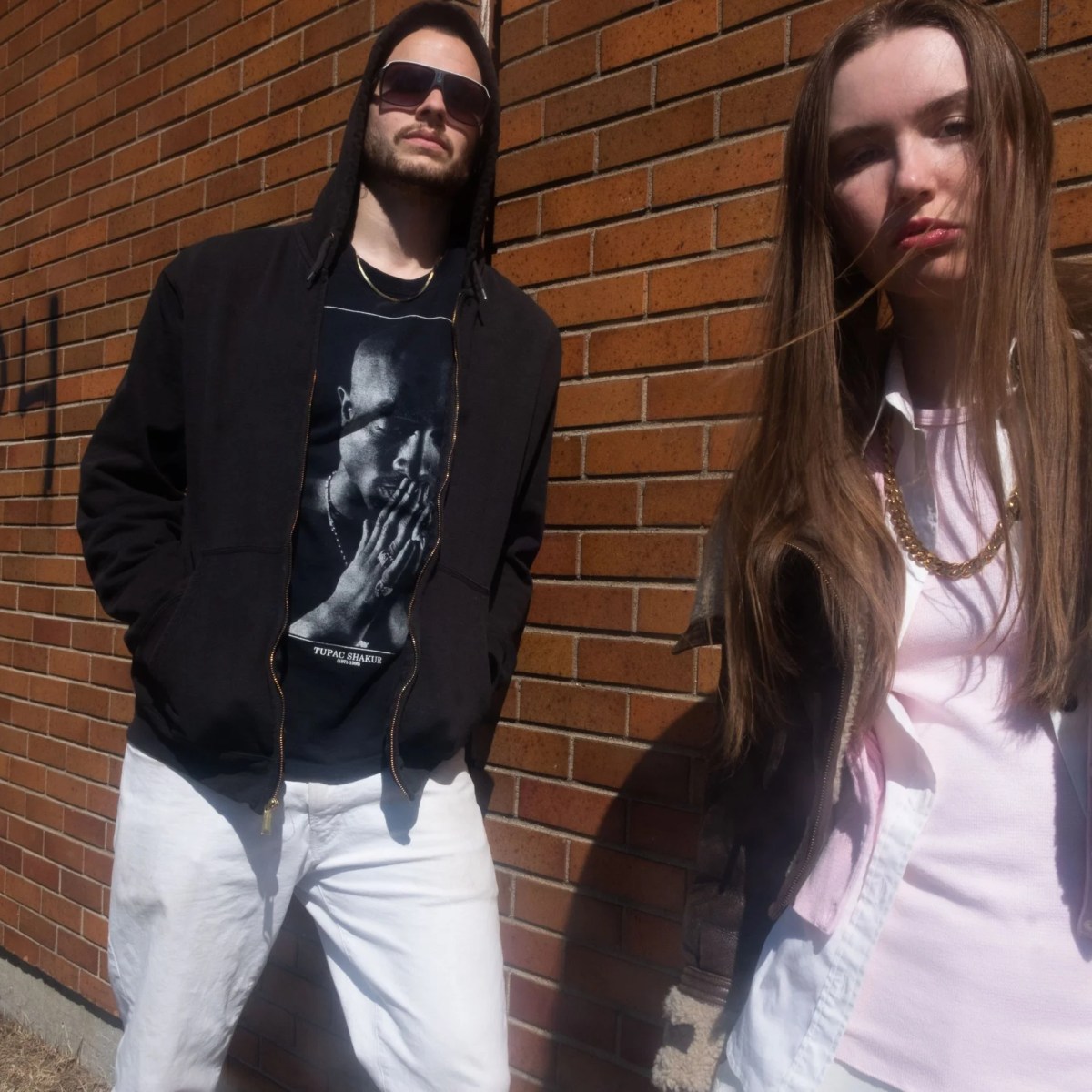
Public Health is Jack Yanover (guitar, vocals), Finley Jones (bass), Ben Miles (drums), and Jake Quinn (guitar).
…
Shayla Little Maclean: I want to do a very quick rundown of our current conception of Public Health and how it came into being. I know [Jake and Jack] started the band, and then it sort of evolved after that.
Jack Yanover: Jake and I started writing [some] things in November of 2023, and then I met Finley that same year through mutuals. He played bass, and we were trying to start a band, and we asked Finley, and what’d you say?
Finley Jones: I said, “Yes.”
JY: He said “yes,” and then we started writing the first few songs. [“Pork Pint”] was the first song we started writing.
SL: And you had Dan [Faitz] on drums for a bit.
JY: But Dan didn’t come ‘til [the] 2nd of January, 2024, when on Instagram we were like, “Hey, we need drummers,” and he’s like, “I’ll do it.” And we had Dan until roughly March [or] April last year. He played on the record, and then Ben recorded the album, engineered the whole thing, mixed it, produced it, mastered it, and then we asked [Ben] to join [as a drummer], and…
SL: And he’s been kicking ass ever since.
JY: Absolutely kicking ass ever since. Yeah.
Collectively: He’s our rock.
…
SL: How would you try to describe Public Health to somebody who’s never heard of you? Whether it be musically, or if you just want to say something silly…
JY: I would say, at times, disorienting, but also… harmonically dense.
FJ: Dense is a very good word.
JY: Yeah, we really try to make it as… not overwhelming, but overwhelmingly harmonic, if that makes any sense. Very full, like, we’re always trying to fill the pockets.
Ben Miles: Compared to, like, your average person’s understanding of music? It’s definitely much more loose [and free] in structure. We don’t really stick to any hard guidelines about valuing like a harmonic or valuing a pleasant sounding thing versus a dissonant sounding thing. There’s a lot of mixing between the two of those, whereas I feel like a lot of bands are more so one or the other. Like, more stuff in a minor key, or more stuff in a major key or more stuff that’s just super dissonant. But honestly, we’re pretty all over the place if you analyze it from a music theory perspective. But [it] kind of just comes together to be noise rock.
JY: I would say it’s very intuitive.
FJ: Scatterbrained intuition.
Jake Quinn: I guess I would say that we’re… pretty sexy. And I think I’ll leave it at that.
SL: Who’s the heartthrob of Public Health?
JY: None of us.
BM: Definitely Jake. But also Jack has his moments.
JQ: Ben does take his shirt off sometimes.
BM: I got new sunglasses! That definitely boosted my heartthrob-ability, so, we all have our moments.
SL: Yeah, new boy band, for real.
FJ: We are all boys!
…
SL: This is stupid question. My editor said I shouldn’t ask it, but… in your other interviews, it seems like people always have the question of, “How’d you get the name Public Health?” You previously stated that you had trouble choosing a name until [Dan Faitz] saw [Jack’s] vaccination reports [addressed from the Ministry of Public Health] on your fridge and said, “We should name it Public Health” instead of [using any of your other choices for a name], like “Houseplant” or “Pith”…
FJ: *laughs*
JY: Yes, you did your research!
SL: Do you have strong feelings about “Pith”?
JY: I do. I have a story, actually. Last night when we played in Ottawa, I went down to the bar to get a drink, and I sat down…I was looking at the prices, and they’re really expensive. And I was like, “Huh? I don’t know what to do.” And [someone was] like, “Get a quart. It’s a Quebec thing.” And I was like, okay, sure, get more bang for your buck. And then I did. And then I started talking to the person… and they’re just talking about bands and […] influences, I guess. And I was like, “What band are you in?” They’re like, “Pith.” And I was like, “Oh my God! We almost named our band Pith!” And they’ve been having fights with another [band named] Pith in the States. Anyway, yeah, that’s my story.
SL: That’s like a glimpse into an alternative reality. My question with that whole spiel is… it’s so stupid. What’s the one vaccination you wouldn’t want to live without?
JY: Wouldn’t want to live without? I think being vaccinated is very important.
SL: If you had to pick one…
JQ: Measles.
BM: AIDS.
SL: They have that one now, right? HIV?
Editor’s note: There are currently no effective vaccines against HIV. However, pre-exposure prophylactic drugs (PrEP), preventative measures akin to vaccines that don’t make use of the adaptive immune system, are commonly taken to diminish the risk of HIV infection.
FJ: If I could only have one more in my life, it would probably be an emergency tetanus shot.
SL: Yeah, if you’re touching rusty things.
FJ: I could tough out the flu.
JY: I wouldn’t need another booster. I think two is fine.
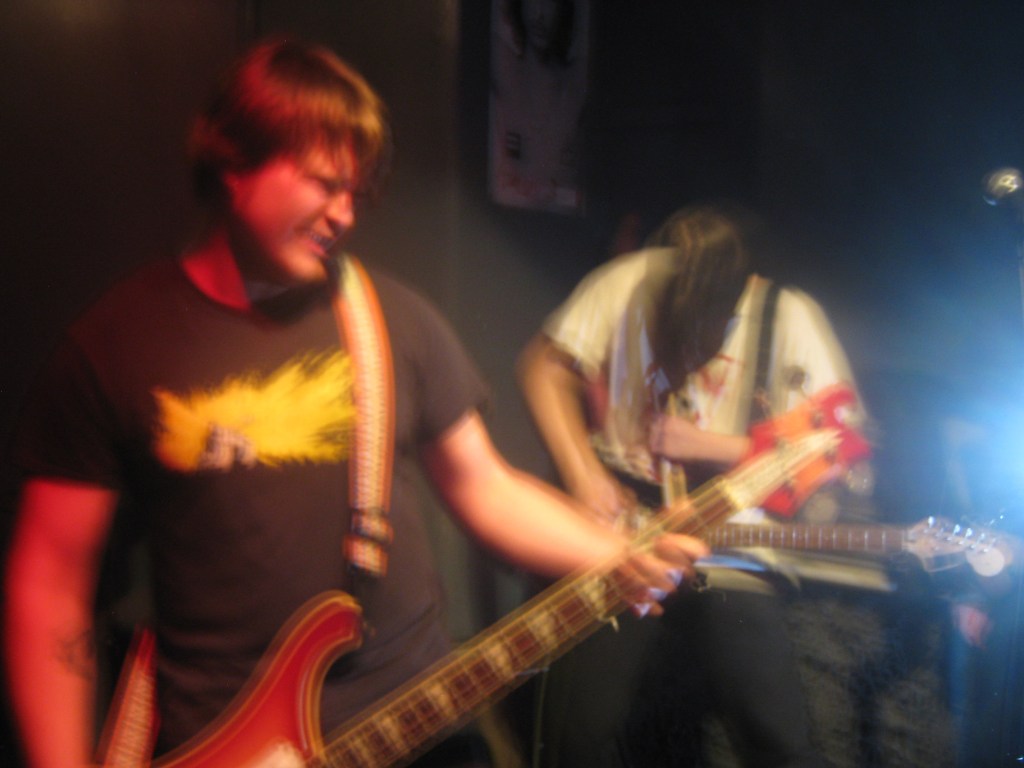
SL: What do you guys think draws individuals to Public Health? What do you guys think you do well as a band—if it’s just in the music, if it’s in the performances… Why do you think [someone goes], “I really want to go see Public Health”? What’s going through their mind?
JY: I don’t know… I don’t really like to think about that…
BM: I wanna say this: There’s a lot of bands, I think, that are doing stuff that [has] a very similar vibe, you know, like Cute, and I would say even, like, Medieval Found Footage.
JY: Great band.
BM: Lots of bands that, in my mind, the[ir] music is in the same exact category [as Public Health], but [they’re] all very different when you actually get down to the details of listening— what it actually sounds like, and what the songs are, and how the songs are composed. But I feel like it’s an interesting kind of genre. It’s almost hard to put a label on [it]. But there is a real genre, and there is a real vibe between what we’re [all] doing […], but everything [within the genre] is kind of unique, you know.
JY: Yeah, I don’t know how people see us, but I hope we seem friendly. We like to joke around. We like to be goofs. I feel like it’s fun to be goofs, and I feel like, maybe that seems like an inviting environment where people can just kind of, you know, chill [and] see a band. You don’t have to be nonchalant and shit. I hate that the most, where it’s all image based. I don’t give a shit. Like, just do your thing, and hang out and listen to music and make music. And I hope that’s a thing that people come to us for. Where it’s an inviting environment. I hope that, even if the music is not so inviting, I guess. To some people.
…
SL: Ben, you recently produced the upcoming Medieval Found Footage (MFF) album, and in their recent segment on CFRU, MFF said that they heard Minamata, and immediately were like, “Who recorded that? Let’s get him. Let’s get Ben Miles to do our record.” What do you think makes people want you to do their record?
BM: Well, I don’t think it’s so much about me, personally. I mean, even with the stuff we did with Minamata, I didn’t even have the fanciest mics. I think it’s mostly [about] the vibe or where [the style of production] kind of comes from, I guess, which is not trying to make it sound like something it’s not. Because a lot of music being recorded today is coming from a place of people going to a studio, and the producer is trying to make everything perfect and turn the band into something that they don’t actually sound like. But if you take a band like Public Health at the time when I recorded them, it’s like: There’s a good band, good songs, and you just make it sound like how it actually sounds, and it sounds good. And with MFF, it’s like, that’s a great band! And the album is gonna sound really good, because they’re just so good. And that’s just kind of [a sonic] aesthetic that I’ve really found to like as I’ve gotten into music.
JY: I think a big reason why people want to work with Ben is because he captures things how it is, and has a really great ear for sonics and sound and acoustics and how to capture it and how to capture a live band. I find that there’s a lot of really overcompressed, spot mic’d records out there, and they just don’t sound, in my opinion, that great. I think that a lot of bands spend a lot of money for… not the greatest sounding record, in my opinion. I feel like [people should stick to] the fundamentals of it all. Just capture it. Capture it well, make sure things are not out of phase and stuff, and just let it kind of mix itself, you know.
BM: But it is interesting because, for example, [take] the Heavy Sweater album that came out last year. I think that’s a really awesome album, and it’s very well produced, and it was done by [Alex Edkins] from Metz. That’s a really well produced album, and that was done by a professional. I’m by no means a professional, I’m not a, like, top level guy or anything, but there’s other [producers] that are also not top level guys. [And] if you’re trying to make it sound like a top level guy, but you’re not necessarily a top level guy, that’s where I feel like [a release] falls short. Because if you just kind of give it what it is, then it’s the most authentic, and personally, I find that to be at least cool. Versus, it’s not really cool to try and make it sound like a big label thing, and then it just… doesn’t. But, it doesn’t sound ‘real’ either. So I just feel like it’s a winning strategy to play to where you’re at.
SL: What’s like a top level guy to you, either right now or in the past?
BM: Well, I mean, [Alex Edkins].
JY: Are you talking like Canadian [people] or anywhere?
SL: Anywhere.
JQ: Probably Steve Albini.
FJ: I was gonna say,
SL: It’s gonna become a Steve Albini circle jerk really quickly.
…
SL: You didn’t record much of Minamata at a studio, [it was] mostly done in Jack’s basement, and then some at [Ben’s] house as well. Are you guys thinking of sticking with this same kind of format in the future? Or do you guys want to give the studio another chance, like at Drift Studios in Goderich where Medieval Found Footage recorded their album? Or do you think Public Health is more in its element doing home recording?
BM: Yeah, we were planning on doing it in Goderich. I have my buddy Greg there. We went to school together, and he’s got a really good studio, and he basically just [set it up] a few months ago officially. He’s got a lot of good gear, he’s got a great room, so I think that’s our plan, just because […] we want to make [future recordings] as good as we can.
JY: I think… we’re definitely going to Goderich, but I think we want to be even more ambitious with it all, just in general. It’s less just live off the floor and vocals. We want to really try and experiment and just see what comes out of it. Because we have a lot more time now. It’s not as rushed [as Minamata], and we want to spend a lot of time with it. We just want to sit with the ideas more.
SL: Any funny stories during the recording [of Minamata]? Did anything go wrong? Anything silly in the basement?
JY: On “Pork Pint” when we just kept going…
JQ: Oh, there is the extra like, four minutes [of feedback at the end] of “Pork Pint.”
JY: That was not, like, planned.
JQ: We just kept going, and no one stopped us.
JY: And it was Jake’s idea to put piano underneath, and it worked really well.
JQ: It’s honestly my favorite part on the album.
BM: My funniest moment from recording was when […] in “F.E.B.,” there’s some gang vocals where Jack says “I’m livid! You’re living!” And then Dan just kept saying, “I’m Finley! You’re Finley!” and that lives… *laughs* I will always remember that as one of the funniest moments […] Probably, for months, that was, like, the funniest thing I heard.
FJ: Did that actually make it [on Minamata]?
BM: Yeah, I think it is in the final one, but it was only [Dan] saying it, so you can’t really hear it.
…
SL: Did you guys go into recording the album knowing exactly which songs you wanted and where, or was anything fleshed out while recording or afterwards?
JQ: There was a bit of moving. We had a general idea of how we wanted it to go. But I think we did end up moving some things around?
JY: We recorded “Goblets” in the same session. But […] I kind of didn’t want to have “Goblets” on the album.
JQ: Yeah, “Goblets” felt out of place for us.
JY: It’s too dance-y.
JQ: When we thought about where to put it on the album, we were like, “Nowhere!”
SL: I get it. Still a very good song! You should play it more often.
FJ: When was the last time we played it?
JQ: Oh, at least a year.
JY: We’ve never played it with Ben.
SL: Oh, wow! That’s crazy.
…
SL: In another interview, you guys already talked about your favorite albums. But are Public Health big readers? What are your favorite books? Do you like literature? Fiction, nonfiction? Does it inspire the band or your music in any way?
JY: I read the basics. Like, I’m not a literature nerd. It’s the most like, pretentious [stuff], like Burroughs, all the Beat stuff, Kerouac, you know, I like that. Especially Naked Lunch, like, just the real abstractness of it all. I really like writing like that, and that connected to me a lot. And, yeah, I like Nietzsche, and Thus Spoke Zarathustra. I just like how they twist words and make it really abstract. And I think that’s cool. And kind of making your own meaning out of it.
FJ: I mean, my favorite book right now, at least, is Fear and Loathing in Las Vegas. So good, very inspirational. Like, for my own writing, I generally like reading old, shitty Western novels, direct-to-TV movie style. I like comics. Generally, I wouldn’t say that it’s super inspired what I do musically, but I feel like in other artistic forms, it has, and I think that carries over a little bit [into my] drawing, [but] music [isn’t] the same world.
BM: I don’t read books.
FJ: You were reading in the car yesterday!
BM: I maybe read like a book or two a year. I like nonfiction books, honestly,
JY: I’m the same, I love biography books,
BM: I do really like a good book when I do find it, but I don’t seek out books because it feels like most of them are… not interesting to me. But I want to read more. So I’m starting to open my mind up to talking to people about that and getting recommendations.
JQ: Yeah, I’m kind of in the same position. I don’t read that much. Finley actually gave me a copy because he got two copies of Fear and Loathing. So I got to read that. I do some online reading about weird science stuff. I don’t understand it, but I try to, and it’s kind of fun. I was reading about string theory. I was like, “That’s cool!” Oh, they’re like, full of strings, and everything’s a string.
FJ: That’s actually so true.
JY: What if we’re the strings!
BM: What if the string was the friends that we made along the way?
FJ: The string is the red rope that binds those friends together. Big red string. That’s a lovers thing.
JY: I mean, I love you, man.
FJ: I love you too.
SL: Aww. Sweet band!
…
SL: I just kind of wanted to talk about lyrics and lyricism in Minamata. We’ll see what happens. I wanted to ask: When I listen to it and I read the lyrics, I kind of sense a bit of a narrative running through [Minamata]. Is that your intention, or am I making shit up? I can kind of connect similar things that happen in different songs. I feel like there’s something happening, and I kind of almost sense a character. Would you agree? Or did you have anything like that in mind?
JY: When I was writing, it wasn’t conceptually out of the gate [that I create a narrative] intentionally. I guess the themes that I was covering all encapsulated and came together, and then I kind of realized a narrative structure after the fact.That’s usually what happens to me, whenever I write things… it’s usually after everything’s done. Then it becomes its own thing. I kind of just like… do it. I don’t really have any overarching theme to [it]. Not that I don’t have anything to say. It’s just… I try not to influence it too much. If I get too into it [and] what it’s supposed to mean, I just start writing shit. I just let it happen. It’s very intuitive, and it’s just ‘expression,’ all at once, and then it kind of becomes something later.
That’s the one thing I like about it, is that I have my own interpretation of it. I don’t necessarily want to share it, but I like it when people develop their own [ideas], and it’s really cool that you told me that you found your own theme coming through. Maybe we both kind of have the same similar idea of what it is, which is cool! And I think it’s cool when people have their own interpretations of it. That’s kind of really why I love to do it. Because it’s like… I find when I see a band, I see pictures, I listen to the music, I see the art, there’s an encompassing theme, and I have my own view of that band. And that moves me, in a way. I think it’s really cool if people ever think in that way in terms of anything creative that I’m a part of.
And so that’s kind of what I intend, is that people make their own interpretations of it, people have their own takeaways from it. And I feel like telling it bluntly just makes it… lose footing? I don’t know. I’m not great at talking about this. But yeah, it’s just like, I have my own theme of it, and it’s because of after the fact [that a narrative might be realized], pretty much.
BM: It’s subconscious!
JY: Yes, exactly.
BM: Because it is real.
JY: It’s real, it’s there.
BM: It’s not conscious. You’re not consciously thinking about it as you’re doing it. But then as it happens, you record it, you listen to it, and then you start to see the meaning.
JY: Yes. And then I see the narrative, yeah. Exactly. [Ben] helped me.
FJ: Just the point on interpreting things… Like, that’s how popular culture is made. You can’t have defined culture unless you’re viewing other cultures from the outside. Because how are you supposed to tell what’s punk and what’s normal or whatever if you don’t have those normal people to be like, “Oh, you’re a punk. You guys are punk.” So if your interpretation of our music is any particular way, you’ll respond to [its content] in a different way, and create, like, a culture in your own head about it, which will influence how you talk about, for example, our music, and…
JY: And that’s how it grows. It just becomes a big web, and it becomes larger than anything we could ever imagine.
SL: Because yeah, when I listen to [Minamata], I kind of see themes running through and yeah, it could totally be [due to a personal] unconscious thing that turns into something that other people can kind of realize and form opinions on.
JY: Some of it is autobiographical and really personal stuff, which is why I don’t really like to talk about it, but it’s all there.
SL: With “Landlord’s Son,” was that inspired by personal experiences? Do you guys have a bad landlord story?
JY: No, it’s actually… it’s not about landlords specifically. The one thing I can say is [that] it’s about someone who is predatory and they come from the lineage of a landlord, and so judging from the culture they grew up in, they inhabit those perverted kinds of tendencies. Because it’s about exploitation and stuff. And so yeah, that is about a story in my life. Not about me directly, but someone close to me.
SL: In a few songs you talk about exploitation. Like in “Goblets,” similar [themes].
JY: Yeah, that’s a pretty rough one.
SL: Do you have anything to say [about “Goblets”]?
JY: Umm…
SL: You don’t have to if you don’t want to. You can keep it a little bit… when it’s ambiguous, it’s more interesting.
JY: Have you guys read the lyrics?
FJ: I haven’t because it’s not in the [Minamata lyrics] booklet.
SL: It’s on the Bandcamp. They’re all on the Bandcamp. How do I know that?
JY: *jokingly smiles* They don’t care.
FJ: I just work here.
JQ: I trust that Jack is a very good artist, a very good writer. I trust him in his vision, and he trusts me to stay out of his way and play guitar. Right?
JY: *laughs* Yeah.
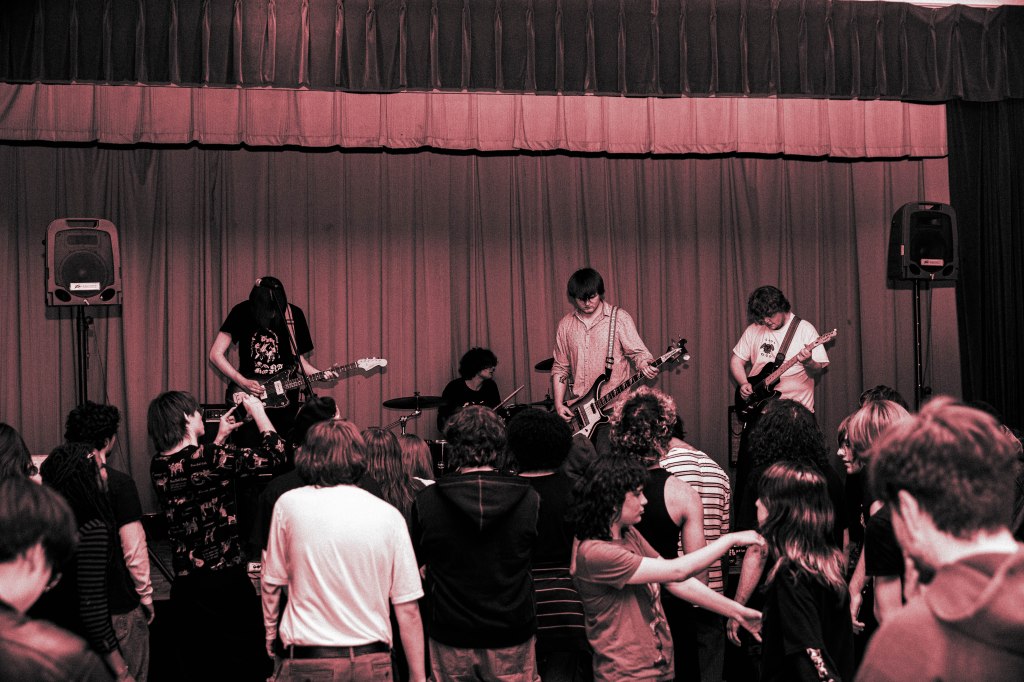
SL: A bit of a general question, who’s someone that each of you respect, musically or for their character? A little bit of an open ended question… Who’s someone that first comes to mind when I say that?
FJ: Bootsy, baby! Bootsy Collins of Parliament-Funkadelic is, like, I think one of the, if not the greatest bass player of all time.
JY: All time? Whoa.
FJ: I mean, I don’t know, he’s pretty influential. He’s up there. I would say one. I’m not gonna say the greatest.
JQ: Well, I wasn’t sure until Finley said that. Now I have two answers, and they’re both bassists. Definitely the most influential [in] why I started playing music was Jaco Pastorius. I think he’s the best bass player ever.
BM: Did you say Jacob Sartorius?
JY: Noooo, Jaco Pastorius!
JQ: And then on top of that, I would say currently it’s probably more Charles Mingus, who’s also a bass player, plus many other things.
BM: Well, ever since I stopped being like a kid, I kind of stopped really getting too involved with caring about particular musicians as people, because it’s kind of complicated. It feels hard. I like to get to know people, […] I don’t think that you can really get to know somebody unless you can actually talk to them. I love a lot of people’s music, and I feel very connected to a lot of artists and stuff. But, personally, the biggest thing that I will always say is that finding out about Nirvana, being told about Nirvana, when I was like 12. That was very inspiring for me, to come across that kind of music.
JY: Someone who generally popped in my mind was Drew Taylor, and he’s from Hamilton. He’s a Hamilton vet, and he’s been doing noise projects, fucking punk bands, like since, the 2000s/late ‘90s. He’s just been around for a long time. And I… I’m really infatuated by the guy. And actually he’s playing tonight. He’s [the singer] in Red 40. He’s also a visual artist, an excellent collage artist. And the more I’ve gotten into collage art, the more I’ve been really into his work. I find [his attitude towards art] really profound, because he is so humble, and he really does not give a shit if anyone looks at any of the things he does. And I think that’s awesome. He has literally thousands of side projects he’s done. And he showed me one time in a studio, just a bunch of these, like, lightning bolt noise albums he was making in like 2004, you know, he just does things all the time. And I just love that. And everything he touches is gold, like, it’s just great.
JQ: I gotta say, Drew Taylor is the only man who made me dance.
FJ: That’s true!
JY: Dude, yes! I witnessed that.
JQ: Last week, he did a techno set as part of a festival here in Hamilton, and I just could not help but to dance. I’m not a dancer. I don’t dance around that much. But I had to!
FJ: [Taylor] is a force.
JY: He’s quite the creative force. And I hope to work with him on something. I think that would be an absolute honour.
SL: Shout out. Get [Jack]. Get him on the project.
JY: Yeah, honestly. Drew! He’s playing tonight.
SL: If you yell loud enough, maybe he’ll come in [the green room].
JY: He’s probably gonna come like, five minutes before the set.
…
SL: You guys are a four piece band, arguably the best number of members for a band. Which Beatle do you align with most and why?
JY: Two of them I don’t really like.
JQ: I feel like we all…
JY: We’re all George. John’s a dick. Yoko is cooler.
SL: Hot take.
JQ: I like Yoko with Sonic Youth.
FJ: I feel like she was a really cool artist, and then John Lennon made her less cool.
JY: Her album Fly is really cool. Honestly, I think it’s better than most of the solo shit that the Beatles made.
SL: A lot of hot takes!
FJ: People are gonna get really fuckin’ mad at you.
JY: I don’t listen to solo Beatles stuff. I just don’t…
JQ: Yeah, I don’t care to. I listened to a lot of it, and I don’t care to go back!
JY: The White Album is really good and like… Revolver’s cool…
SL: Sgt. Pepper…
FJ: I love Sgt. Pepper! Everybody tells me they hate Sgt. Pepper. I love Sgt. Pepper. I don’t care.
JY: Me, personally, I… “[Being for] the Benefit of Mr. Kite!” Are you kidding me?
SL: *laughs* Out of all of the Beatles songs, the fuckin’, “The Benefit of Mr. Kite!” is better?
JY: No, no, no! I was saying, like, no, I don’t like that song.
SL: Oh, okay. I thought you were saying, like, [“Mr. Kite!”] is the number one…
*room laughs*
JY: No, no, no, I was saying, like, Sgt. Pepper is one of their worst because they have a lot of songs like that, that just suck.
FJ: And like, waltzy pop songs.
JY: “While My Guitar Gently Weeps,” that’s a great song. And “Happiness Is A Warm Gun.” And “Long, Long, Long,” and guess what? They’re all on the White Album, my favourite.
FJ: Yeah, “I Will,” a great song, also on the White Album.
SL: Good point. All right, everybody’s George.
JQ: *laughs* It’s so stupid.
JY: Uh, I think we’re all George.
FJ: I could be Ringo. I’ll be Ringo.
JY: Well, if you’re gonna be Ringo I wanna be Ringo.
FJ: What?! You can’t just say that.
…
SL: You guys have been playing a lot of unreleased material and live shows. It’s usually half unreleased stuff [on recent set lists]. Do you want to say anything about this material? Do you guys feel like you’re going in a different direction or a similar direction? Are you gonna record anything soon?
JQ: Oh, within, like, the next year or so.
JY: We just wanna finalize the stuff and then start recording.
JQ: I think one thing, at least personally, that I’ve noticed change with the newer material is we’re relying a lot less on like feedback and drone-y parts and just distortion. We were kind of leaning almost into like, post-rock a little bit with some of our longer songs, and this time, we’re kind of trying to focus on rhythm. We like our clean guitar sounds.
JY: Rhythm is king.
JQ: Rhythm is king. We like to try to just make weird rhythms between the four of us the best we can… [which] also kind of works harmonically, I guess.
FJ: About what direction we’re going in, I would say… the later songs that we wrote [for Minamata] being like, “Rotterdam,” “Ba & Shu,” “Landlord[‘s Son],” I think we’re going in that same direction, but kind of farther down, if that makes sense. I think it’s a lot more intense. To me, it’s weirder, a little bit. In a good way, not in a bad way. I feel like that’s the best way I can think to describe it, is just sort of farther down that same kind of path.
JY: Yeah, I don’t really know how to describe it. [Jake and I] have been listening to a lot of [Captain] Beefheart and U.S. Maple. Yeah, it’s Beefheart coded. I just like doing fun things with the guitar.
JQ: I’ve started to look at the guitar a lot differently than when we were writing a lot of the Minamata stuff.
JY: Honestly, me, personally, when I first saw The Film Critics from London, Ontario, that was really inspiring. Like, the clean tones that they use and how they play. They’re so sick. So, yeah, just more clean and just kind of weird. But also… it’s kind of more emotional at points. Some of the highs are way more emotionally high than Minamata, in my opinion.
BM: It’s also kind of heavier, too.
SL: You guys said at one point that the band is kind of focused on drums and bass, and the guitar is a kind of extra texture on top of that. Do you still kind of feel that way with the new stuff? Or do you feel like you’re moving a bit more towards an identity within the guitar?
JQ: Oh, I don’t know, that’s an interesting question. I’m not entirely sure how to respond to that. I feel like, basically, because of the new stuff being a lot more rhythmic, I think in that sense, we’re a little bit more together. Instead of a strong rhythm and two scratchy guitars. It’s more [that] I find I try to play rhythms along with Ben a lot, and I think that kind of unifies it a little bit.
JY: Ben is really locked in.
JQ: Ben’s locked. So that’s the other difference, is the Minamata stuff was all written with Dan as a drummer, and most of this new stuff is written with Ben. So I think that’s probably the most major difference.
JY: Different engine.
JQ: Definitely different engine. Yeah.
JY: Different engine, it just changes.
….
SL: What’s going on with [the record label] Ernesto and Basin? You guys did Minamata on it.
JY: Yeah, It was like a label I was trying to start, also like a promotional thing, but like, I just don’t have money and as much time, and I just prefer not to use it anymore. During my gap year I was being really ambitious. Like, “I’m gonna start a label, I’m gonna do all this stuff,” but I don’t have money. Can’t do it. So yeah. But if you can, start a label, people, because we need it. We need independent labels.
….
SL: What’s next for Public Health? Do you have big plans for the summer?
JY: We’re planning on touring. Like to the East coast, Halifax, that’s the plan.
SL: Where are you most excited to play?
Collectively: Montreal.
FJ: I mean, I would say I’m most excited to go [to Halifax].
JQ: I just don’t know what to expect from Halifax. I’ve been to Halifax, it’s a cool city, but I have no idea.
JY: I love Montreal.
JQ: Montreal’s a cool city.
BM: [Pabst Blue Ribbon] Max!
JY: PBR Max, yeah!
…
SL: [Lastly] what’s, just in general, an album or song you think people either watching or reading this should listen to? If you guys want to shout out Hamilton stuff specifically, go ahead, because this might be read by people at UofT.
JY: Check out Fester. They just released a demo on Bandcamp, and just recorded an album that will be coming out soon. And Bleat, they also have a demo out. They’re sick, just like, great noise, kind of sound like Flipper. Just unbelievable stuff. And stuff that’s not Hamilton or local… check out Misery Is A Butterfly by Blonde Redhead, because we listened to that earlier. That’s a great album. That’s slowly becoming one of my top favorites ever.
FJ: I mean, now that I’m on the spot, I can’t really think of anything except Paul’s Boutique by the Beastie Boys.
BM: The local band that I’m the most excited about right now is Medieval Found Footage, and that album will be coming out in a few months, so I think that’s something to keep an eye out on.
JY: They also released something on Bandcamp, from the CFRU live segment. They remastered it and mixed it and it sounds excellent.
JQ: I think I’m gonna shout out Rat Hearts by Chamellows.
*Drew Taylor of Red 40 enters the room*
Collectively: DREW!
JY: *looks to Drew* Sorry, I was talking about you earlier, man.
SL: Is there literally anything at all anybody wants to say at the end of this interview?
JQ: Oh, I do! Love yourself and we love you.
FJ: I’ve got a thing I can say, too: Eat good food, listen to good music, um, talk to people. Eat more good food and listen to more good music. Watch good movies, play video games, read books.
SL: Which video games?
FJ: All of them, anything you want. Nothing with anime girls, though, that’s lame.
JQ: Most importantly, stay healthy.
SL: That’s the Public Health catchphrase!
JY: Stay warm!
SL: It’s wet outside.
JY: It’s wet outside, but yeah. Make sure you stay warm.




 Demo Magazine
Leave a comment