
Folk often falls victim to its own strengths. The genre’s stylistic skeleton is really simple, relying on no more than the voice and the guitar. Even then, the guitar simply keeps the music’s fluidity and rhythm. The real centered idea is the transparency of the artist’s words, as their vocal intonations and timbre are the final vessel before their intimate thoughts are out in the open. Putting yourself into writing is not easy; it’s a vulnerable practice that any writer must get comfortable enough with. The self doubt and reservations that singers may experience before revealing their voice is frankly justified. Not every songwriter is going to translate their being in a way that will impress. Even scarier, their actual voice may not even be seen as a worthy messenger. The intuitive accessibility of folk tends to overcorrect itself because it is too accessible. Most dime-a-dozen rage rappers with 200 monthly listeners on Spotify have not found their voice yet, so they mask it in blown out 808s and lyrical repetition. I am not saying the final frontier of musical evolution is to become a singer-songwriter, but there is a unique difficulty in its simplicity. Perhaps I am biased, but I rarely see anyone striving to be this generation’s Elliott Smith or Nick Drake. Is it an internalized fear of putting your emotions at the forefront? Clearly not, because I’ve seen significantly more peers start emo bands than write folk. It seems that the burning fire of young adult catharsis has not been extinguished, merely changed shape.
To find the root of this apprehension we have to travel back to a decade that shares parallels with the present. The ‘80s were fueled by sonic exploration that laid the groundwork for many important genres and subcultures that would follow. Though the structure of songwriting did not fundamentally change during the decade, there was a deep reconsideration of the way that accompanying sounds can guide the voice (or even bury it, in the case of Cocteau Twins). Aspiring artists were finding their identity in instrumentation, not in verse. This sentiment is still seen in present decades–the massive expansion of the internet throughout the 2000s allowed the 2010s to explore its newfound equipment just as the ‘80s did. This generation’s expansion of the musical landscape lent itself to alternative R&B, hyperpop, and experimental hip-hop styles (I never said that good rage music doesn’t have its merit). There is one stipulation in regards to folk being placed on pause, being the fact that it is not absolute. What happens to the contemporary folk artists who slip through the cracks? Who are these brave people pushing through and revealing themselves in such a transparent manner during times where that is not the focus?
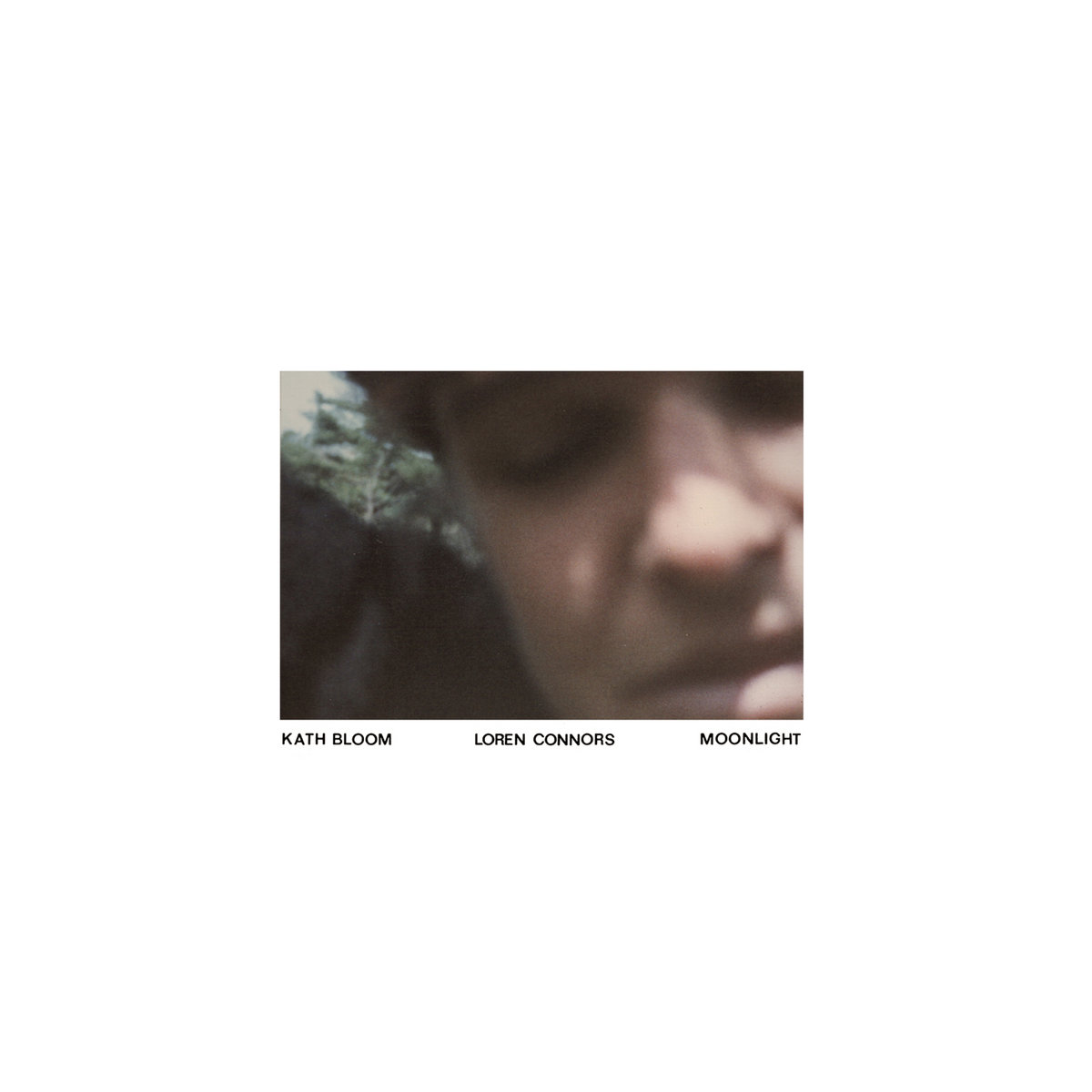
Kath Bloom and Loren Mazzacane were a singer-songwriter duo whose discography was short lived, only releasing music from 1978-1984. Bloom was the songwriter and vocalist, while Mazzacane was the producer and guitar player. Moonlight was the final release by the duo, being their most intimate and refined output, perfectly ending their career together. Bloom’s vocal style possesses the same soft, anxious inflection of Big Thief era Adrienne Lenker, while Mazzacane’s guitar work is comforting and twangy, often baked into the fuzz of the recording equipment. Sonically, the album has this patient, breathable pacing that complements the poetic descriptions of love and longing. Between each line and musical refrain you can hear the creaks of their chairs and the handling of the guitar. This background noise is not the result of bad equipment—there is clear intention with the intimacy of their surroundings. By inserting the ambience of their environment, the album becomes a simple reflection of how the music is unmistakably a product of them as artists. It is a bold but obvious choice when creating music that is so deeply personal.
This album’s contextual placement well into the ‘80s highlights Bloom and Mazzacane’s folk-driven bravery that was mostly lost at the time. The ‘70s were undeniably an important time for folk, expanding on the work pioneered in the Greenwich Village scene (Bob Dylan, Simon & Garfunkel, etc.). It allowed singer-songwriters to take many forms and separate into different local scenes. The problem with the fragmentation of musical ideas, however, is that they quickly saturate and artists find themselves moving on to explore new ground. For example, compare Paul Simon’s ‘70s material to his poppy, polished ‘80s material. What this shift meant for folk was that the ‘80s were left with musicians who were being unapologetically true to their artistic desires, despite how vulnerable it may have made them in the sea of new wave and hair metal. Daniel Johnston, Arthur Russell and Jandek are some of the main names remembered from this era, all falling into the category of “outsider music,” a style largely defined by loners and their eclectic takes on singer-songwriter identity.
While Bloom and Mazzacane’s music didn’t occupy the outsider aesthetic, the fact that the outsider artists were their main contemporaries shows the widespread loneliness that was being communicated at the time. Bloom decided to take this theme and apply it to the anxieties present in love. I have rarely seen love lyrically explored in such a pure, honest manner, and this record fills nearly every line with this honesty. One of the best examples is in the song “Turn On Your Head Lights,” where the following line is expressed: “How will you feel in my life/It’s so bleak here I just wanna hold you.” There is no embellishment or wordiness; these are organic thoughts put into verse. The occasional break from raw, grounded writing turns to the only thing Bloom sees as worthy comparison, that being the spiritual. Lines like “I don’t feel God in a name/I feel him in your eyes” off of “Can You Find Me?” feels like a reversal of one of my favourite lines from the entirety of ‘60s folk, being Dave Bixby on “Mother”: “How little I did know, how much she loved me so […]/ How can I tell her, her old prayers have all come true?” Instead of Bixby using another person’s love as a catalyst to find salvation, Bloom uses religion as the catalyst to find love.
One would imagine that sharing feelings so profound would be overwhelming, and this is exactly demonstrated on the album. Halfway through, an instrumental interlude is used as a break from the longing, with Mazzacane’s tender guitar work serving as a reminder of the aesthetic pulse holding everything together. The last spoken line on the album is the title of the last track “Love Makes It All Worthwhile,” a beautiful parting message and culmination of the record’s thesis.
Moonlight is a spiritual reflection of one of life’s most complicated emotions. The deeply personal writing would resonate with anyone because it’s communicated with such simple language both in verse and in sound. Everything is tightly knit despite the space each song is given to breathe. As an example of folk it is masterful, but as an example of artistic maturity, it is unprecedented. Kath Bloom and Loren Mazzacane’s ability to fully transfer their persons into their work in a time where the style was not desired is powerful. Simplicity will never fail you if you’re being authentically yourself.


Leave a Reply